
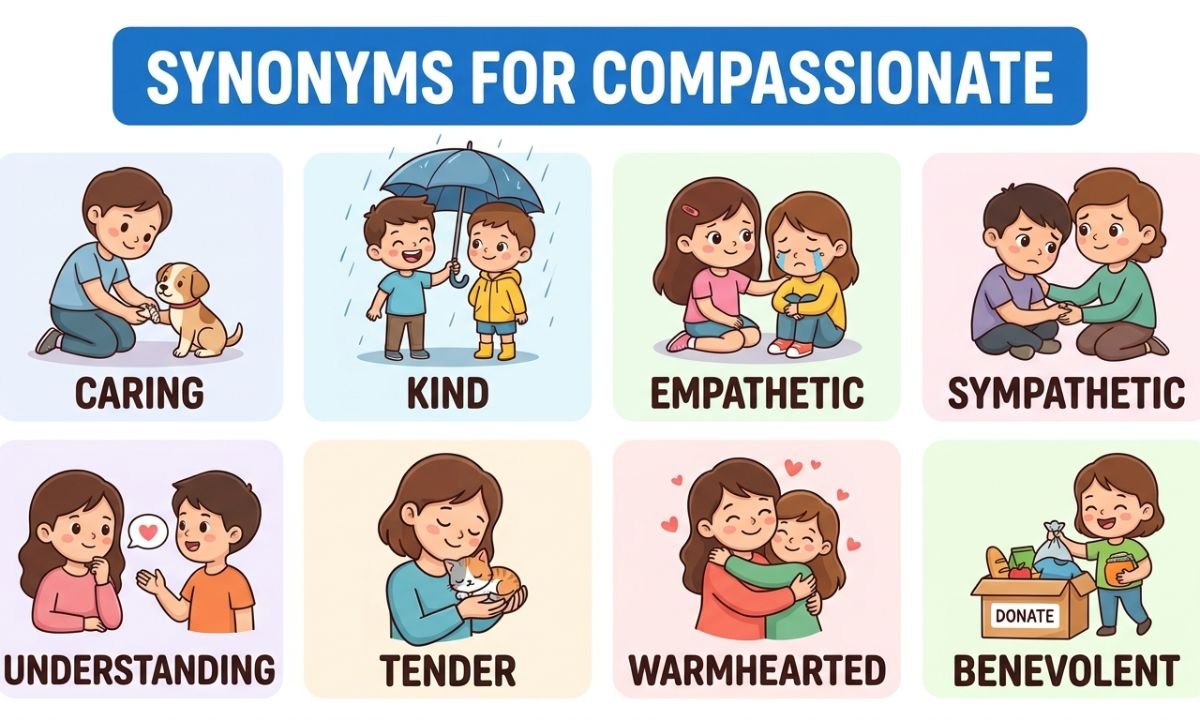
Compassionate is a good word, but it gets overused. Writers lean on it in résumés, reviews, eulogies and everyday emails. After a while, it stops landing.
The fix is not a random thesaurus swap. Each alternative carries its own tone, strength and level of formality. Here are 30 of them, with plain definitions, real situations and sentences you can borrow.
What Does Compassionate Mean?
Compassionate describes a person who notices someone else’s suffering and wants to help. It goes beyond feeling bad for them. The word pairs awareness with action, which is why it fits so well in healthcare, leadership and caregiving.
Related ideas include empathy, sympathy, kindness, mercy and benevolence. Each one leans on a different part of the same idea, and that difference is what makes a good synonym useful.
Why Look for Another Word for Compassionate?
There are three practical reasons. The first is repetition. If compassionate appears four times on one page, readers skim past it.
The second is precision. Compassionate is broad. A word like attentive, forgiving or generous says exactly what the person did.
The third is tone. In a eulogy you may want something warmer. In a performance review you may want something more measured. The right synonym fixes the tone without changing the meaning.
Compassionate vs. Empathetic vs. Sympathetic
These three get swapped all the time, and they are not the same.
Empathetic means you feel what the other person feels, or understand it from the inside. Sympathetic means you feel for them from the outside. Compassionate means you feel for them and want to do something about it.
Kind is different again. It describes behavior and does not require deep feeling. A stranger can be kind. Compassion usually needs some understanding of what the other person is going through.
How to Choose the Right Word
Start with the setting, then check the tone.
- Résumés and LinkedIn: caring, supportive, empathetic, dependable. Keep it specific and tie it to results.
- Healthcare: attentive, gentle, patient, humane.
- Leadership: understanding, considerate, supportive, thoughtful.
- Creative writing: tender, softhearted, big-hearted, gracious.
- Formal writing: benevolent, humane, magnanimous, charitable.
It also helps to know the opposites. Callous, indifferent, unfeeling, harsh and cruel are the usual antonyms, and they make good contrast words in persuasive writing.
A few words can backfire. Pitying can sound condescending. Lenient and soft can suggest weakness instead of care.
Empathetic
Core Definition & Nuance: Empathetic means able to understand and share what another person feels, which is narrower than compassionate because it stops at feeling and does not require action. A manager who spots a teammate’s panic before a deadline is being empathetic.
Emotional Value & Benefit: This word tells the reader that someone listened closely. People feel understood instead of managed. That feeling lowers defenses and keeps the conversation open.
Usage Examples:
- She gave an empathetic reply that put the nervous client at ease.
- An empathetic interviewer notices when a candidate needs a moment to think.
Sympathetic
Core Definition & Nuance: Sympathetic means feeling sorrow or concern for someone else’s trouble, usually without sharing the experience itself. A neighbor who drops off dinner after hearing about your layoff is being sympathetic.
Emotional Value & Benefit: It signals support without pretending to know exactly how it feels. That honesty keeps the tone respectful. It works well when you want to comfort without overstepping.
Usage Examples:
- The judge was sympathetic to the family’s situation but still followed the law.
- He offered a sympathetic nod and let her finish her story.
Kind
Core Definition & Nuance: Kind means friendly, generous and considerate in how you treat people, and it focuses on behavior more than deep emotion. A stranger who holds the door and carries your groceries up the stairs is kind.
Emotional Value & Benefit: It is simple and instantly believable. Readers do not have to decode it. That clarity makes it safe in almost any setting.
Usage Examples:
- Our kind receptionist remembers every patient by name.
- It was a kind gesture to cover her shift without being asked.
Caring
Core Definition & Nuance: Caring means showing concern for the wellbeing of others, and it often suggests steady, ongoing attention instead of a single moment of sympathy. A nurse who checks on a patient again before leaving the ward is caring.
Emotional Value & Benefit: It suggests reliability. People hear that someone will actually show up. That builds trust faster than a grand statement would.
Usage Examples:
- She is a caring mentor who answers questions late into the evening.
- The school hired a caring counselor for first-year students.
Tender
Core Definition & Nuance: Tender means gentle and soft in how affection or concern is shown, with a hint of vulnerability that kind and caring lack. A father quietly adjusting a blanket over his sleeping child is tender.
Emotional Value & Benefit: It creates closeness. The reader feels safe, not judged. It adds warmth without sounding dramatic.
Usage Examples:
- He spoke in a tender voice as he sat beside his grandmother.
- The film is at its best in its tender, unhurried final scene.
Gentle
Core Definition & Nuance: Gentle means mild and careful in manner, which makes it a good fit when force or sharpness would be easy. A vet calming a frightened dog with slow, quiet movements is gentle.
Emotional Value & Benefit: It lowers tension in a room. Readers picture patience and control. It is also a strong word for describing how hard news was delivered.
Usage Examples:
- The doctor gave a gentle explanation of what the test results meant.
- Her gentle feedback made the revision feel doable.
Warmhearted
Core Definition & Nuance: Warmhearted means naturally affectionate and generous with kindness, and it describes character more than a single act. The shop owner who always slips an extra pastry into the bag is warmhearted.
Emotional Value & Benefit: It paints a person as approachable. Readers relax around someone described this way. It feels personal without being sentimental.
Usage Examples:
- Everyone in the building knew her as a warmhearted neighbor.
- The warmhearted coach never let a player leave practice feeling small.
Softhearted
Core Definition & Nuance: Softhearted means easily moved by another person’s pain, sometimes to the point of giving in, which makes it slightly less formal and more affectionate than compassionate. A teacher who cannot say no to a student in tears is softhearted.
Emotional Value & Benefit: It shows sensitivity and gives the character a human flaw. Readers tend to like that. Be careful in professional settings, where it can read as too yielding.
Usage Examples:
- He is a softhearted man who still feeds the stray cats behind his shop.
- My softhearted sister cried through the whole adoption video.
Also Read: Actions Synonym: Better Words and When to Use Them
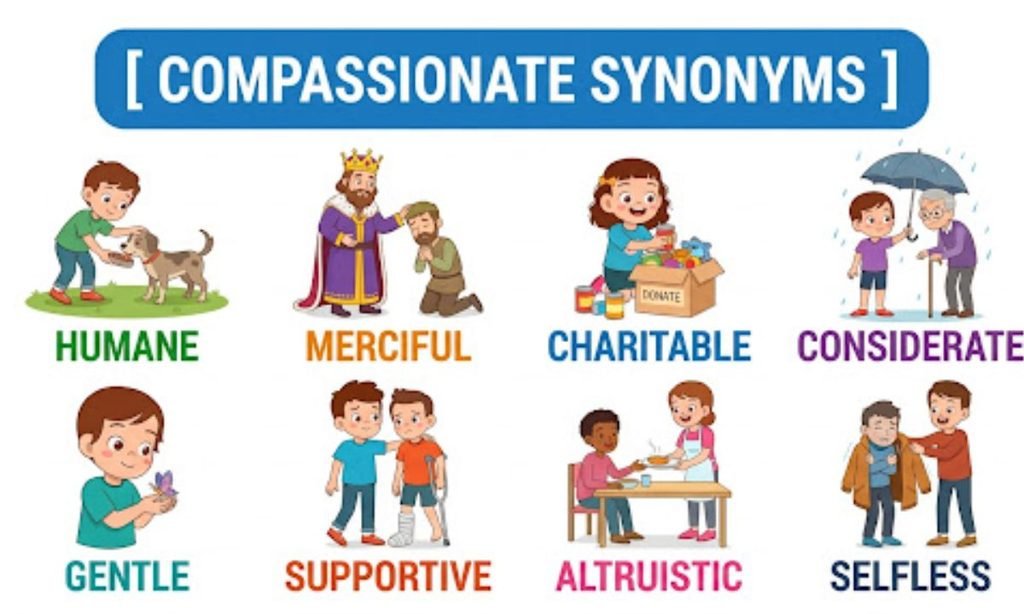
Merciful
Core Definition & Nuance: Merciful means showing restraint or forgiveness toward someone who is at your mercy, which makes it about power and choice more than feeling. A judge who gives a lighter sentence to a first-time offender is merciful.
Emotional Value & Benefit: It implies that the person could have been harsher and chose not to. That choice carries weight. It works best when someone holds real authority.
Usage Examples:
- The committee was merciful and allowed a second submission.
- In the story, the king proves merciful to his defeated rival.
Benevolent
Core Definition & Nuance: Benevolent means well-meaning and generous toward others, often from a position of influence or wealth, and it sounds more formal than kind. A foundation that funds school lunches in struggling districts is benevolent.
Emotional Value & Benefit: It signals good intent at scale. Readers see an organization or leader acting for others’ benefit. It suits formal writing but can sound distant in personal notes.
Usage Examples:
- The benevolent donor asked that her gift remain anonymous.
- A benevolent leader shares credit and takes responsibility for mistakes.
Humane
Core Definition & Nuance: Humane means showing respect for the dignity and suffering of people or animals, especially in how they are treated or housed. A shelter that limits crowding and gives each animal daily exercise runs a humane program.
Emotional Value & Benefit: It frames care as a standard, not a mood. Readers hear fairness and basic decency. That makes it useful in policy, healthcare and ethics writing.
Usage Examples:
- The clinic adopted a more humane approach to end-of-life care.
- Workers deserve humane schedules and fair notice.
Understanding
Core Definition & Nuance: Understanding means willing to see a situation from another person’s side and respond without judgment. A boss who hears that your child is sick and simply says to go home is understanding.
Emotional Value & Benefit: It tells people they will not be punished for being human. That creates psychological safety fast. It is one of the best words for describing workplace culture.
Usage Examples:
- My understanding landlord agreed to a short payment plan.
- An understanding teammate makes hard weeks easier to get through.
Also Read: Another Word for And: 30 Smarter Alternatives
Considerate
Core Definition & Nuance: Considerate means thinking about other people’s needs and feelings before acting, and it is more about small, everyday choices than deep emotion. A guest who texts ahead to say they will be late is considerate.
Emotional Value & Benefit: It highlights respect for other people’s time and comfort. Readers see someone who plans around others. It is a safe, professional choice for reviews and references.
Usage Examples:
- She was considerate enough to send the notes before the meeting started.
- A considerate host asks about allergies in advance.
Thoughtful
Core Definition & Nuance: Thoughtful means paying attention to what someone needs or would enjoy, and it often shows up as a small, well-timed gesture. A coworker who leaves tea on your desk during a rough week is thoughtful.
Emotional Value & Benefit: It tells the reader that someone noticed. Being noticed feels good. It adds warmth without any heavy emotion.
Usage Examples:
- He wrote a thoughtful note after the funeral.
- The thoughtful design includes quiet hours for sensitive guests.
Charitable
Core Definition & Nuance: Charitable means generous in giving help or in judging others, and it has two uses: giving to those in need and giving people the benefit of the doubt. A reviewer who reads a rough draft as an honest first try is being charitable.
Emotional Value & Benefit: It signals goodwill in how someone interprets others. That reduces defensiveness. It works well in debates and feedback.
Usage Examples:
- She took a charitable view of the missed deadline.
- The company is known for its charitable support of local clinics.
Altruistic
Core Definition & Nuance: Altruistic means putting the wellbeing of others ahead of your own gain, and it is stricter than generous because it implies no reward. A volunteer who spends every Saturday at a food bank without ever posting about it is altruistic.
Emotional Value & Benefit: It signals pure motive. Readers trust the person more. It is a strong word for mission statements and service work.
Usage Examples:
- Her altruistic streak led her to donate a kidney to a stranger.
- The team’s altruistic spirit showed during the storm cleanup.
Selfless
Core Definition & Nuance: Selfless means putting other people’s needs first with little thought for yourself, and it is more personal and emotional than altruistic. A parent who skips dinner so the kids can eat is selfless.
Emotional Value & Benefit: It carries real weight and admiration. Readers feel the sacrifice. Use it sparingly so it keeps its force.
Usage Examples:
- The firefighter’s selfless act saved three people.
- He is selfless with his time and never keeps score.
Supportive
Core Definition & Nuance: Supportive means offering encouragement and practical help so someone can keep going, which is more active than sympathetic. A friend who proofreads your application and sits with you while you hit submit is supportive.
Emotional Value & Benefit: It tells people they are not alone. That builds confidence. It is one of the safest and most useful words for résumés and reviews.
Usage Examples:
- She was a supportive manager who backed her team in front of leadership.
- A supportive partner makes risky career moves feel possible.
Nurturing
Core Definition & Nuance: Nurturing means helping someone grow by giving steady care, attention and encouragement, so it looks forward instead of just comforting. A teacher who guides a shy student toward speaking in class is nurturing.
Emotional Value & Benefit: It suggests patience and long-term investment. People hear that growth is welcome. It suits education, parenting and mentoring.
Usage Examples:
- The nurturing environment helped new hires settle in quickly.
- He built a nurturing team culture where questions were encouraged.
Loving
Core Definition & Nuance: Loving means showing deep affection and care, and it is the most personal word on this list. A grandmother who saves her best stories for bedtime is loving.
Emotional Value & Benefit: It carries warmth and belonging. Readers feel safe. Keep it for personal writing, because it can sound too intimate at work.
Usage Examples:
- He grew up in a loving household full of music.
- She sent a loving message to her sister before the surgery.
Big-hearted
Core Definition & Nuance: Big-hearted means openly generous and quick to help, with a cheerful, everyday feel that compassionate does not always have. A bakery owner who gives away unsold bread every night is big-hearted.
Emotional Value & Benefit: It sounds friendly and unforced. Readers warm to the person right away. It works well in profiles and casual writing.
Usage Examples:
- The big-hearted crowd raised thousands in a single evening.
- Our big-hearted coach pays for the team’s snacks himself.
Kindhearted
Core Definition & Nuance: Kindhearted means kind by nature, and it describes lasting character more than one nice act. A man who has fostered rescue dogs for twenty years is kindhearted.
Emotional Value & Benefit: It suggests consistency. Readers believe the goodness is real. It is a gentle upgrade on plain kind.
Usage Examples:
- A kindhearted stranger returned her lost wallet with the cash intact.
- The kindhearted nurse sat with the patient until his family arrived.
Generous
Core Definition & Nuance: Generous means willing to give time, money or credit freely, and it focuses on the giving more than the feeling. A colleague who shares the spotlight after a big win is generous.
Emotional Value & Benefit: It makes goodwill visible and concrete. Readers can picture the act. It works in almost any tone.
Usage Examples:
- She was generous with her time when interns asked for advice.
- The generous gift covered tuition for four students.
Patient
Core Definition & Nuance: Patient means able to stay calm and caring while waiting or while someone struggles, so it describes compassion under pressure. A tutor who explains the same fraction problem a fourth time without a sigh is patient.
Emotional Value & Benefit: It signals control and respect. People stop feeling rushed. That makes it valuable in healthcare and teaching.
Usage Examples:
- The patient nurse walked him through each step again.
- A patient leader gives people room to learn from mistakes.
Attentive
Core Definition & Nuance: Attentive means closely tuned in to what someone says and needs, which makes it a practical form of compassion. A waiter who notices a guest is celebrating a birthday and quietly adjusts the service is attentive.
Emotional Value & Benefit: It tells the reader that care shows up in details. People feel seen. It is a strong, professional pick for service roles and reviews.
Usage Examples:
- The attentive staff checked in without hovering.
- She was attentive to every concern the family raised.
Sensitive
Core Definition & Nuance: Sensitive means aware of and careful with other people’s feelings, and it can also mean easily hurt, so context matters. A speaker who warns the audience before describing a painful event is being sensitive.
Emotional Value & Benefit: It shows awareness of emotional risk. Readers feel handled with care. Pair it with a clear object to avoid confusion, as in sensitive to their concerns.
Usage Examples:
- He was sensitive to the family’s grief and kept the meeting short.
- The report takes a sensitive approach to a painful subject.
Humanitarian
Core Definition & Nuance: Humanitarian means concerned with improving the lives of people in need, especially through large-scale aid. A group delivering clean water and medicine after a flood is doing humanitarian work.
Emotional Value & Benefit: It points to purpose and scale. Readers see care turned into action. It is best for formal writing about causes and organizations.
Usage Examples:
- She spent a decade in humanitarian relief across three regions.
- The humanitarian mission delivered supplies within 48 hours.
Forgiving
Core Definition & Nuance: Forgiving means willing to let go of anger and give someone another chance, so it shows compassion after harm. A manager who coaches an employee through a costly error instead of firing them is forgiving.
Emotional Value & Benefit: It tells people mistakes are survivable. That builds honesty and trust. Be careful that it does not read as ignoring real accountability.
Usage Examples:
- She was forgiving when the vendor missed the first delivery.
- A forgiving culture helps people admit problems early.
Magnanimous
Core Definition & Nuance: Magnanimous means generous and gracious toward a rival or someone less powerful, especially after winning. A champion who praises the opponent in the post-match interview is magnanimous.
Emotional Value & Benefit: It signals confidence and class. Readers see strength paired with grace. It is formal, so it suits speeches and profiles more than casual notes.
Usage Examples:
- He was magnanimous in victory and thanked the losing team.
- The magnanimous senator offered to share credit for the bill.
Gracious
Core Definition & Nuance: Gracious means kind, polite and generous in a way that puts others at ease, with more elegance than plain kind. A host who calmly clears up a spilled drink and makes the guest laugh is gracious.
Emotional Value & Benefit: It shows composure and care at the same time. People feel welcome. It is a polished choice for hospitality and formal writing.
Usage Examples:
- She was gracious when the award went to a colleague.
- The gracious reply smoothed over an awkward moment.
Frequently Asked Questions
What is a synonym for compassionate?
Common synonyms for compassionate include caring, kind, empathetic, sympathetic, understanding and benevolent.
Is empathetic the same as compassionate?
No, empathetic means sharing or understanding another person’s feelings, while compassionate adds a wish to help.
What is the difference between sympathy and compassion?
Sympathy is feeling sorry for someone from a distance, while compassion pairs that concern with a desire to act.
What is a professional way to say compassionate?
Supportive, considerate, understanding and attentive are professional choices that fit résumés, reviews and workplace emails.
What are antonyms for compassionate?
Common antonyms include callous, indifferent, unfeeling, harsh, cruel and unsympathetic.
Final Thoughts
The right word does two jobs at once: it makes your meaning exact and it sets the emotional temperature of the sentence. Empathetic tells a reader you understood, supportive tells them you stayed, and merciful tells them you chose restraint. Small differences like these shape how people feel when they read you, which is why a careful swap beats a lazy repeat every time.

Hi, my name is Kevin. I love to read and learn new words every day. On this site, I share better synonyms and simple grammar rules. I also help you fix commonly misspelled words so you can choose the right words every time. Let us learn and write well together!
4 thoughts on “Synonyms for Compassionate: 30 Better Words and When to Use Them”