
“Collaboration” shows up in nearly every email, résumé, and meeting invite. Used too often, it goes flat. The right alternative tells your reader how people worked together and why it mattered. This guide gives you 28 synonyms for collaboration, each with a clear meaning and a real situation where it fits. You will also see when to go formal, when to stay casual, and which words to avoid. Pick the one that matches your moment and your reader.
What Is Another Word for Collaboration?
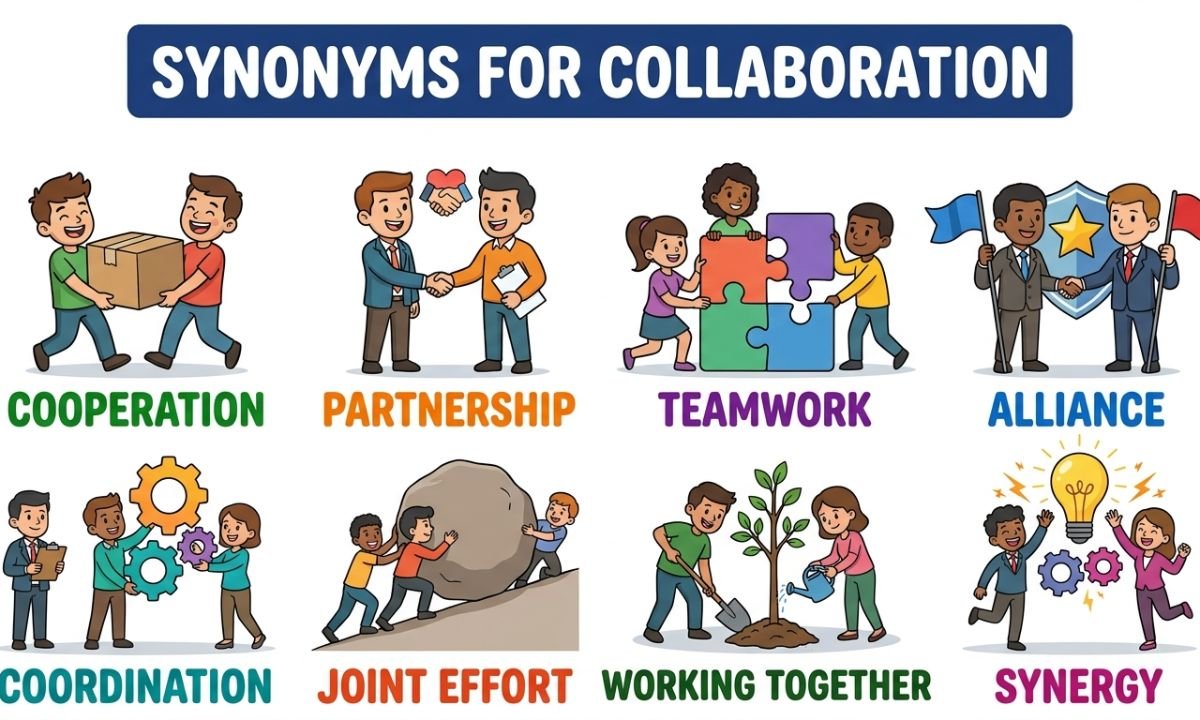
The short answer: cooperation, partnership, and teamwork are the most common alternatives. Five more that work in almost any setting are alliance, coordination, joint effort, working together, and synergy.
Which one is best depends on what you want to say. Are people helping each other? Sharing ownership? Moving as one group? Each question points to a different word.
A quick map of words for collaboration by tone:
- Formal: partnership, alliance, concerted effort, association, consortium
- Professional: coordination, joint effort, alignment, cooperative relationship
- Casual: working together, teaming up, joining forces
What Does Collaboration Mean?
Collaboration has two main senses. The first is a relationship between people or groups with a shared interest. The second is the act of working together toward a shared result.
It is a noun. The verb is “collaborate.” You will see it in a few common patterns: “collaboration with,” “collaboration among,” “in collaboration with,” and “potential collaboration.”
What can you say instead of “in collaboration with”? Try “in partnership with,” “together with,” “alongside,” or “with support from.” Each reads cleaner and sounds less like a press release.
Collaboration vs. Cooperation: Key Difference
Cooperation means people help each other or go along with a shared plan. Collaboration means they build something together, with shared ownership of the result.
Here is a simple test. If you hand someone a document and they follow your instructions, that is cooperation. If you both write it, argue over the headline, and share the byline, that is collaboration.
Teamwork sits nearby but differs again. Teamwork describes how one group functions. Collaboration can stretch across teams, companies, or even rivals.
How to Choose the Right Synonym
Start with your reader. Then match the word to the setting, the tone, and the level of commitment.
Another Word for Collaboration in the Workplace
Use coordination for organized tasks, joint effort for shared projects, and alignment when people agree on direction. In a work email, “cooperation” and “partnership” are safe and clear.
Formal Synonym for Collaboration
Choose partnership, alliance, association, or concerted effort. These suit reports, proposals, and official announcements.
Collaboration Synonym for Resume and LinkedIn
Go specific. “Cross-team coordination,” “joint effort with sales,” and “partnership with external vendors” all beat a bare “collaborated.” Name the other side and the result.
Academic, Creative, and Business Settings
In research, “co-creation” and “consortium” fit well. In creative work, “working together” and “teaming up” feel natural. In business, “joint venture” and “alliance” carry the right weight.
Words to Avoid
Collaboration can turn negative when the goal is shady. “Collusion” and “conspiracy” describe secret cooperation for harmful or unfair ends. Do not use them as friendly synonyms.
Antonyms of Collaboration
The opposites include competition, rivalry, conflict, opposition, discord, and working alone.
Cooperation
Core Definition & Nuance: Cooperation is willing help between people or groups that keeps work moving, without requiring shared ownership. It fits when a neighboring team shares its data so your report ships on time.
Emotional Value & Benefit: It sounds friendly and low pressure. Readers hear goodwill instead of obligation. That lowers defenses and invites people to help.
Usage Examples:
- Thank you for your cooperation while we updated the schedule.
- The project moved faster because of strong cooperation between design and support.
Partnership
Core Definition & Nuance: A partnership is a formal, lasting relationship where each side carries real responsibility and shares the result. It fits when two companies sign a yearlong agreement to build and sell a product together.
Emotional Value & Benefit: It signals equal footing. Both sides feel respected and accountable. It adds weight and trust to a business relationship.
Usage Examples:
- We formed a partnership with a local university to train new analysts.
- Our partnership has grown from one pilot to three regional programs.
Teamwork
Core Definition & Nuance: Teamwork is how members of one group coordinate to reach a goal, with the focus on the group rather than the product. It fits when a hospital shift crew handles an unusually busy night.
Emotional Value & Benefit: It puts the group before the individual. Readers hear that nobody is carrying the load alone. That steadies morale.
Usage Examples:
- Great teamwork got the launch out two days early.
- Her résumé highlights teamwork across three departments.
Alliance
Core Definition & Nuance: An alliance is a strategic agreement between groups with a shared interest, often because each needs the other’s strengths. It fits when three small brands unite to negotiate better shipping rates.
Emotional Value & Benefit: It carries strength and purpose. The bond feels deliberate, not accidental. Readers trust that the group will hold together under pressure.
Usage Examples:
- The two firms formed an alliance to enter the European market.
- An alliance with local retailers gave us shelf space we could not have won alone.
Coordination
Core Definition & Nuance: Coordination means organizing people and tasks so they fit together without overlap. It fits when event planners, caterers, and AV staff work from a single run sheet.
Emotional Value & Benefit: It suggests order. Readers feel the work is under control. Confusion about who does what fades.
Usage Examples:
- Close coordination between sales and support shortened our response times.
- We need better coordination before the product ships.
Joint Effort
Core Definition & Nuance: A joint effort is work by two or more parties who each contribute directly to one outcome. It fits when two departments co-write a company policy.
Emotional Value & Benefit: It credits everyone involved. People feel seen. Shared credit prevents turf disputes.
Usage Examples:
- The report was a joint effort between finance and operations.
- Fixing the outage took a joint effort from every engineering team.
Synergy
Core Definition & Nuance: Synergy is the idea that combined work produces more than the parts could alone, and it is overused in corporate talk. It fits when a designer and a developer solve a problem neither could crack separately.
Emotional Value & Benefit: It promises added value. When a real result backs it up, it feels earned. Without proof it sounds hollow, so pair it with specifics.
Usage Examples:
- The merger created real synergy between our research and sales teams.
- There is synergy in pairing a writer with a data analyst on this series.
Working Together
Core Definition & Nuance: Working together is the plainest, most casual way to describe shared effort. It fits when a friend suggests you two start a podcast.
Emotional Value & Benefit: It feels warm and human. There is no jargon between you and the reader. Plain words build trust fast.
Usage Examples:
- We have been working together on the budget since March.
- Working together, the two schools built a shared reading program.
Association
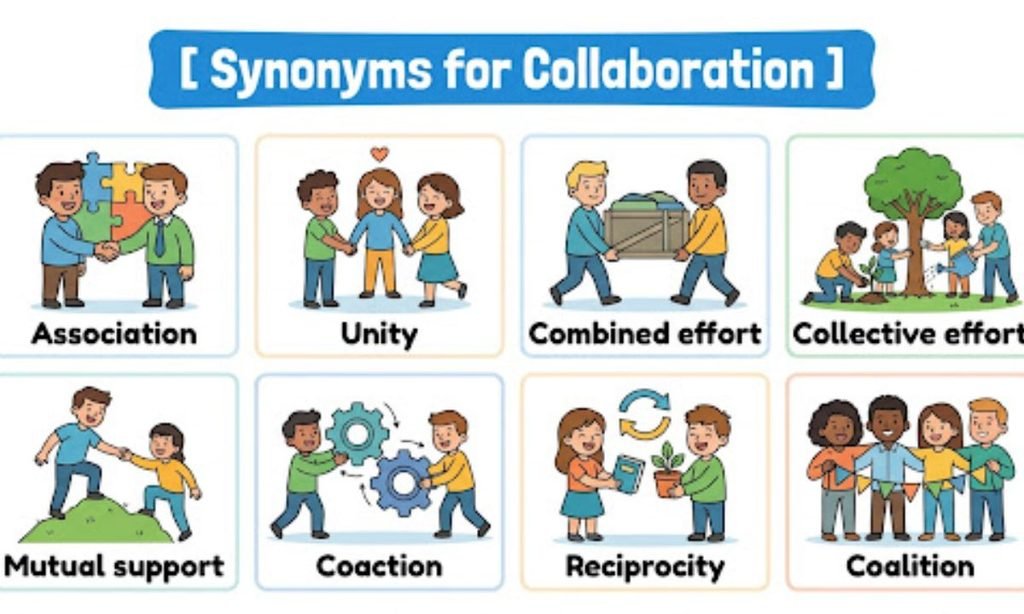
Core Definition & Nuance: An association is a looser, often long-term connection between people or groups tied by a shared field or aim. It fits when a freelancer lists professional ties with a trade group.
Emotional Value & Benefit: It suggests credibility through connection. Readers assume shared standards. The commitment stays light, so the pressure does too.
Usage Examples:
- Her association with the museum began as a volunteer role.
- The studio works in association with several regional publishers.
Unity
Core Definition & Nuance: Unity is a state of being aligned in purpose, and it speaks more to spirit than to tasks. It fits when leaders ask a divided staff to rally after a tough quarter.
Emotional Value & Benefit: It speaks to belonging. People feel part of something larger. Tension softens.
Usage Examples:
- The team showed unity when the deadline moved up.
- Unity across regions made the rollout possible.
Collective Effort
Core Definition & Nuance: A collective effort is work pooled from a whole group, with no single star. It fits when a neighborhood cleans up a park on a Saturday morning.
Emotional Value & Benefit: It spreads credit wide. Every contributor matters. It works well in thank-you notes.
Usage Examples:
- The grant came through thanks to a collective effort from the whole staff.
- Cleaning the archive was a collective effort that took all week.
Mutual Effort
Core Definition & Nuance: A mutual effort is work in which each party gives and gets something, with fairness at the center. It fits when two startups swap services instead of paying each other.
Emotional Value & Benefit: It signals fairness. Neither side feels used. A balanced exchange feels safe.
Usage Examples:
- Reaching the settlement was a mutual effort.
- A mutual effort between landlord and tenant cleared the repair backlog.
Combined Effort
Core Definition & Nuance: A combined effort merges separate contributions toward one result and highlights the total. It fits when three volunteer groups raise money for the same cause.
Emotional Value & Benefit: It lets readers see scale. Many small inputs add up. That feels motivating.
Usage Examples:
- Through combined effort, we reached the goal a week early.
- It took the combined effort of marketing and legal to clear the campaign.
Joining Forces
Core Definition & Nuance: Joining forces is an energetic phrase for groups that unite against a challenge. It fits when two rival bakeries share a stall at a holiday market.
Emotional Value & Benefit: It adds momentum. Readers sense a shared challenge. It works well in announcements.
Usage Examples:
- Our two studios are joining forces to launch a shared brand.
- Joining forces let us cover more cities on the same budget.
Teaming Up
Core Definition & Nuance: Teaming up is an informal, short-term way to describe two or more people pairing on a task. It fits when two coworkers sit down together to fix a stubborn bug.
Emotional Value & Benefit: It feels light and friendly. The stakes seem low. It invites help without pressure.
Usage Examples:
- I am teaming up with Priya on the vendor review.
- Teaming up saved us hours on the data cleanup.
Also Read: Synonyms for Stop: 35 Better Words for Every Situation
Cooperative Relationship
Core Definition & Nuance: A cooperative relationship is an ongoing connection built on mutual help and trust, in a slightly formal register. It fits when a school and a local library share resources year after year.
Emotional Value & Benefit: It sounds stable and respectful. It signals long-term reliability. Stakeholders feel reassured.
Usage Examples:
- We have built a cooperative relationship with our suppliers.
- A cooperative relationship between city and county improved emergency response.
Concerted Effort
Core Definition & Nuance: A concerted effort is determined, coordinated work by several parties toward a specific aim, and it carries urgency. It fits when several agencies respond together to a flood.
Emotional Value & Benefit: It conveys seriousness and focus. Readers feel purpose. It commands respect in formal writing.
Usage Examples:
- A concerted effort across the department cleared the backlog.
- Reducing waste will take a concerted effort from every plant.
Co-Creation
Core Definition & Nuance: Co-creation is making something together from the start, with every side shaping it, which goes further than asking for feedback. It fits when a brand designs a product with customers in workshops.
Emotional Value & Benefit: It gives people ownership. Participants feel heard. Buy-in rises.
Usage Examples:
- The curriculum came out of co-creation with teachers.
- We use co-creation sessions to shape each new feature.
Joint Venture
Core Definition & Nuance: A joint venture is a business arrangement where companies share resources, risk, and profit on a defined project. It fits when two firms open a manufacturing plant together.
Emotional Value & Benefit: It signals clear terms. Structure protects both sides. That builds confidence.
Usage Examples:
- The two carmakers announced a joint venture to build batteries.
- Our joint venture with a local distributor starts in spring.
Alignment
Core Definition & Nuance: Alignment is agreement on goals and direction before the work begins. It fits when leaders settle priorities ahead of a planning cycle.
Emotional Value & Benefit: It reduces friction. People know where they stand. Clarity up front prevents rework later.
Usage Examples:
- We need alignment on scope before we start.
- Strong alignment between product and marketing shaped the launch plan.
Common Cause
Core Definition & Nuance: A common cause is a shared mission that unites different people, often with a moral edge. It fits when rival nonprofits unite behind a clean-water campaign.
Emotional Value & Benefit: It turns strangers into allies. It gives the work meaning beyond tasks. People feel inspired to stay.
Usage Examples:
- The groups made common cause on housing reform.
- Despite past disputes, they found common cause in protecting the river.
Collective Action
Core Definition & Nuance: Collective action is group action taken together to pursue a shared interest, often civic or political. It fits when tenants organize to challenge a rent increase.
Emotional Value & Benefit: It conveys power in numbers. Individuals feel less alone. It encourages people to join in.
Usage Examples:
- Collective action by residents stopped the rate hike.
- Researchers argue that collective action works best with clear leadership.
Shared Effort
Core Definition & Nuance: A shared effort spreads responsibility and workload evenly across a group. It fits when classmates split a group project into equal parts.
Emotional Value & Benefit: It signals fairness. Everyone belongs. Resentment has less room to grow.
Usage Examples:
- The cookbook was a shared effort among six friends.
- Success in this role depends on shared effort, not heroics.
Consortium
Core Definition & Nuance: A consortium is a formal group of organizations pooling resources to reach a big goal. It fits when several universities combine funds to build a research lab.
Emotional Value & Benefit: It adds weight and credibility. Scale becomes obvious. Funders feel reassured.
Usage Examples:
- A consortium of hospitals funded the study.
- We joined a consortium to share training costs.
Pooling Resources
Core Definition & Nuance: Pooling resources means combining money, tools, or people so each party gets more than it could alone. It fits when small shops share one delivery van.
Emotional Value & Benefit: It sounds practical and fair. It shows smart planning. It feels like plain common sense.
Usage Examples:
- By pooling resources, the three schools bought one shared lab.
- Pooling resources let the startups afford a legal team.
Mutual Support
Core Definition & Nuance: Mutual support is help that flows both ways, practical and emotional. It fits when two new managers coach each other through their first year.
Emotional Value & Benefit: It creates safety. Isolation shrinks. People take smarter risks when they know someone has their back.
Usage Examples:
- The group runs on mutual support, not competition.
- Mutual support kept the team steady through the reorganization.
Liaison
Core Definition & Nuance: A liaison is a person or arrangement that keeps two groups communicating, which makes it narrower than full collaboration. It fits when one engineer sits between product and support to relay needs.
Emotional Value & Benefit: It names a clear channel. Misunderstandings drop. Both sides know whom to ask.
Usage Examples:
- She serves as liaison between the lab and the hospital.
- Close liaison with local police helped the festival run safely.
Coalition
Core Definition & Nuance: A coalition is a temporary union of separate groups, often with different interests, around a single aim. It fits when community groups join to oppose a zoning change.
Emotional Value & Benefit: It shows strength through variety. The cause gains legitimacy. Breadth makes the message harder to ignore.
Usage Examples:
- A coalition of schools lobbied for better funding.
- The coalition formed in a week and held together for a year.
Frequently Asked Questions
What is another word for collaboration?
Cooperation, partnership, and teamwork are the most common choices, and the best one depends on whether you mean helping, sharing ownership, or group effort.
What are 5 synonyms for collaboration?
Five reliable synonyms are cooperation, partnership, teamwork, alliance, and coordination.
What is the best synonym for collaboration?
Cooperation is the most natural all-purpose choice, while partnership is best for formal business relationships.
Is “teamwork” a synonym for collaboration?
Yes, though teamwork describes how one group functions while collaboration often means shared creation across people or groups.
What can I say instead of “in collaboration with”?
Try “in partnership with,” “together with,” or “alongside” for a cleaner, more natural phrase.
Conclusion
The words you choose for collaboration do real work: they tell readers how people worked together, who held responsibility, and how much trust sat behind the effort, so pick “cooperation” when you mean goodwill, “partnership” when you mean shared ownership, “coordination” when you mean order, and “coalition” when you mean a union of different voices, and your writing will feel clearer, steadier, and more human every time.