
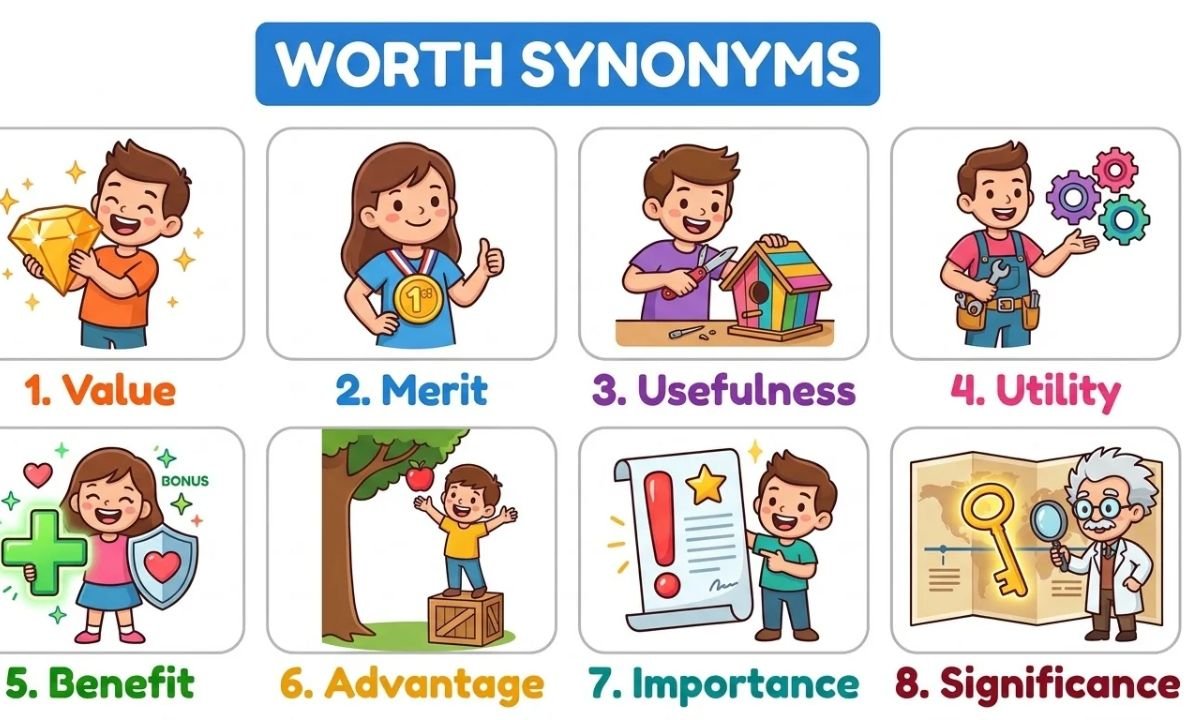
The word worth does a lot of jobs. It can mean price, importance, wealth, or the way you see yourself. That range makes it handy, and it also makes it vague.
A good list of worth synonyms fixes that. Each alternative points at one clear meaning. Your reader stops guessing and starts understanding.
This guide sorts another word for worth by sense, by part of speech, and by tone. It explains where price and worth part ways. It also covers self-worth, which most thesaurus pages bury in a long list.
You will find 30 synonyms for worth, each with a short definition and two example sentences. Use them to write with more precision and less repetition.
Quick Worth Synonyms by Meaning
Start with the sense you need. Worth splits into three main groups, and each group has its own best words.
Value and importance: value, merit, importance, significance, utility, usefulness, benefit, advantage, weight, quality.
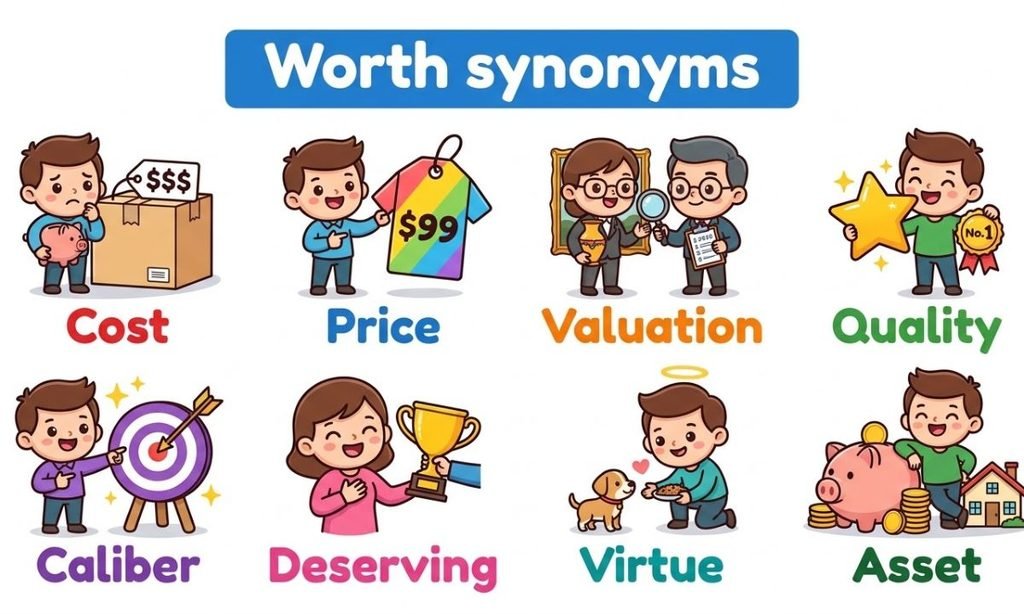
Price, cost, and valuation: valuation, appraisal, assessment, estimation, price, cost.
Wealth and assets: wealth, assets, capital, equity, net worth, riches.
Personal worth: worthiness, esteem, dignity, self-respect, standing.
A word for worth in one group rarely works in another. Value fits a belief or a bank balance. Merit fits a belief only. Keep that split in mind as you read on.
Choosing the Right Word for Context
The same idea sounds different in a boardroom and at a dinner table. Pick the register first, then the word.
Formal and Financial Terms vs. Everyday Language
Formal writing favors valuation, appraisal, equity, and capital. These words signal measurement. They suit reports, contracts, and investor updates.
Everyday speech leans on value, price, and worth itself. You say a car is worth the money. You do not say it has strong appraisal merit.
Idioms sit in the middle. Worth one’s salt, worth its weight in gold, and worth a shot all carry feeling that a formal term cannot. Use them when you want warmth, and skip them in a legal memo.
Expressing Personal Worth, Dignity, and Self-Esteem
Self-worth is not a money question. It describes how a person sees their own value. Words like dignity, self-respect, esteem, and worthiness fit here.
Do not swap in valuation or assets for a person. It sounds cold and a little insulting. Choose words that treat people as people.
Price vs. Value vs. Worth
Price is what you pay. Value is what you get. Worth is the judgment that connects the two.
A cheap tool can be worth far more than its sticker price if it lasts a decade. An expensive watch can be worth less than you paid if you never wear it. Cost measures the outlay. Worth measures the return.
Net worth adds another layer. It subtracts debts from assets and tells you what a person or company owns outright. It says nothing about quality or meaning.
Worth Synonyms by Part of Speech
Most entries below are nouns, since worth usually names a thing. Adjectives and verbs come into play when you describe something as deserving or useful. Worthy, valuable, and worthwhile are adjectives. Deserve, warrant, and cost are verbs that cover similar ground. The last few entries in the list bridge both groups.
30 Worth Synonyms and How to Use Them
1. Value
Meaning: Value is the usefulness or importance something holds, and it is the most flexible swap for worth. A buyer weighing two similar laptops asks which one offers more. The word keeps your message neutral and easy to follow.
Usage Examples:
- The report shows the real value of the new training program.
- Customers notice value quickly when service is consistent.
2. Merit
Meaning: Merit is earned quality that deserves praise or reward, so it carries a moral edge that value lacks. A hiring panel reviewing finalists judges each on merit rather than connections. The word signals fairness and builds trust in the decision.
Usage Examples:
- The proposal succeeded on merit alone.
- We promote people based on merit and results.
3. Importance
Meaning: Importance is how much something matters to a goal or a person. A manager explaining a deadline stresses its importance to the client launch. It tells the listener where to put their attention.
Usage Examples:
- She explained the importance of backing up every file.
- The importance of this meeting cannot be overstated.
4. Significance
Meaning: Significance points to meaning with real consequences, and it feels weightier than importance. A researcher presenting results explains what the finding means for the field. The word lifts a point above routine detail.
Usage Examples:
- The significance of the result became clear after the second trial.
- He understood the significance of the date.
5. Utility
Meaning: Utility is practical usefulness, the worth of a thing measured by what it does. A shopper comparing kitchen tools picks the one with the most daily use. The word keeps the focus on function instead of feeling.
Usage Examples:
- The app’s utility grows with every new feature.
- Judge each tool by its utility, not its brand.
6. Usefulness
Meaning: Usefulness is the plain, everyday version of utility and sounds friendlier in speech. A teacher asking students to rate a handout wants to know how helpful it was. The word is clear and warm, so people answer honestly.
Usage Examples:
- The usefulness of the checklist became obvious on day one.
- Readers praised the usefulness of the glossary.
7. Benefit
Meaning: Benefit is the positive result a person gains, which makes it a personal kind of worth. A new hire comparing job offers weighs health coverage and flexibility. The word frames worth as something the reader receives.
Usage Examples:
- The main benefit of the plan is lower monthly cost.
- Clients see the benefit within the first week.
8. Advantage
Meaning: Advantage is a favorable edge over alternatives, so it measures worth by comparison. A small shop competing with a chain highlights its local knowledge. The word shows why a choice wins without overselling it.
Usage Examples:
- Speed gives our product a clear advantage.
- Her language skills were a real advantage abroad.
9. Weight
Meaning: Weight is the influence or authority something carries in a decision. A board member’s opinion may count for more than a stranger’s, even if both are polite. The word suggests worth that shifts outcomes.
Usage Examples:
- Her recommendation carried real weight with the committee.
- Evidence has more weight than opinion.
Open this right now: Entertain Synonyms: 38 Better Words by Context and Tone
10. Quality
Meaning: Quality describes how good something is, so it ties worth to craft instead of price. A diner choosing between two similar meals picks the one made with better ingredients. The word builds confidence that the worth is real.
Usage Examples:
- Buyers pay more when quality is easy to see.
- The quality of the writing set the book apart.
11. Excellence
Meaning: Excellence is quality at a very high level, a step past simply good. A coach describing an athlete’s season reaches for it when results stand out. The word sets a high bar and raises expectations.
Usage Examples:
- The award recognizes excellence in public service.
- Their commitment to excellence shows in every detail.
12. Virtue
Meaning: Virtue is moral goodness, and it makes worth about character instead of output. A neighbor praised for honesty has virtue even without wealth. The word invites respect for how a person acts.
Usage Examples:
- Patience is a virtue in customer support.
- He trusted her virtue more than her résumé.
13. Valuation
Meaning: Valuation is a formal estimate of what an asset or company is worth in money. A founder raising funds negotiates a number with investors. The word signals a measured, financial view and keeps emotion out.
Usage Examples:
- The startup’s valuation doubled in a year.
- An independent valuation settled the dispute.
14. Appraisal
Meaning: Appraisal is an expert judgment of value, most often for property or collectibles. A homeowner refinancing orders one before the bank approves the loan. The word suggests a trained, outside opinion, which adds credibility.
Usage Examples:
- The appraisal came in above the asking price.
- We need a professional appraisal of the painting.
15. Assessment
Meaning: Assessment is a careful evaluation of worth, quality, or risk, and it can be formal or informal. A team lead reviewing a project writes one before the next planning cycle. The word feels fair and invites discussion.
Usage Examples:
- Her assessment of the vendor was balanced and clear.
- We completed a full assessment of the site.
16. Estimation
Meaning: Estimation is a rough judgment of value or amount, softer than a formal valuation. A contractor quoting a kitchen remodel gives a range before measuring. The word admits uncertainty, which helps the listener trust the number.
Usage Examples:
- By my estimation, the repair will cost about a thousand dollars.
- His estimation of the risk proved accurate.
17. Price
Meaning: Price is the amount asked or paid, which is not always the same as worth. A traveler sees two hotel rooms at different rates and wonders what the gap buys. The word keeps the talk on money and avoids confusion.
Usage Examples:
- The price rose after demand jumped.
- Compare the price against what you actually get.
18. Cost
Meaning: Cost is what must be given up to get something, and it includes time and effort as well as money. A student weighing a degree counts tuition and lost wages. The word makes tradeoffs visible, so decisions feel honest.
Usage Examples:
- The true cost of the delay was lost trust.
- We cut cost without cutting quality.
19. Wealth
Meaning: Wealth is a large store of money, property, or resources, and it can also mean abundance in general. A planner helping a family explains how savings grow across generations. The word suggests long-term strength instead of a single paycheck.
Usage Examples:
- Steady saving built their wealth over thirty years.
- The region’s wealth came from farming.
20. Assets
Meaning: Assets are things of value that a person or business owns. A shop owner listing equipment, inventory, and cash for a loan application counts each one. The word makes worth countable and gives lenders something solid to check.
Usage Examples:
- The company’s main assets are its patents.
- She listed every asset before the meeting.
21. Capital
Meaning: Capital is money or resources used to build more value. A bakery owner seeking funds for a second oven needs capital, not just savings. The word frames worth as fuel for growth and signals business intent.
Usage Examples:
- They raised capital to open three new stores.
- Skilled workers are the firm’s real capital.
22. Equity
Meaning: Equity is the share of value an owner holds after debts are subtracted. A homeowner who has paid down a mortgage sees growing equity. The word states ownership clearly and keeps debt in the picture.
Usage Examples:
- They built equity in the house for ten years.
- Employees receive equity after one year.
Open this right now: Synonyms for Caring: 32 Better Words and Examples
23. Net Worth
Meaning: Net worth is total assets minus total debts, so it shows what a person truly owns. Someone planning retirement checks it once a year to track progress. The phrase gives a clean, honest snapshot without the noise of income.
Usage Examples:
- His net worth grew steadily after he cleared his loans.
- Track your net worth every January.
24. Riches
Meaning: Riches means great wealth, often with a vivid or storytelling tone. A writer describing a merchant’s rise uses it to add color. The word sounds a bit old-fashioned, so it suits narrative better than financial reports.
Usage Examples:
- The story follows a farmer who finds unexpected riches.
- True riches, she said, are time and health.
25. Worthiness
Meaning: Worthiness is the state of deserving respect, trust, or reward. A lender reviewing an applicant looks at credit history to judge it. The word separates the person’s standing from the price tag, which keeps the tone fair.
Usage Examples:
- The panel reviewed each applicant’s worthiness for the grant.
- Her reliability proved her worthiness.
26. Esteem
Meaning: Esteem is high regard, whether from others or from yourself. A new manager earns it from the team by following through on small promises. The word shows respect without flattery and strengthens working relationships.
Usage Examples:
- The team holds her in high esteem.
- Praise from peers raised his esteem.
27. Dignity
Meaning: Dignity is the inherent worth of a person, independent of status or money. A nurse speaking calmly to a frightened patient protects it in a small way. The word builds psychological safety because it says the person matters regardless.
Usage Examples:
- Every customer deserves to be treated with dignity.
- He left the meeting with his dignity intact.
28. Self-Respect
Meaning: Self-respect is the belief that you deserve fair treatment, and it is the steadiest form of self-worth. A freelancer turning down a low offer shows it by protecting their rate. The word makes boundaries sound reasonable instead of harsh.
Usage Examples:
- Self-respect kept her from taking the unfair deal.
- Good leaders protect their team’s self-respect.
29. Standing
Meaning: Standing is a person’s position or reputation within a group. A consultant with years of reliable work enjoys strong standing in the industry. The word conveys earned worth quietly and works well in professional writing.
Usage Examples:
- Her standing in the field opened doors.
- The scandal damaged the firm’s standing.
30. Worthwhile
Meaning: Worthwhile describes something that repays the time or effort spent on it. A busy parent deciding whether to attend an evening class asks if it is worth the trouble. The word gives a quick, friendly verdict that readers trust.
Usage Examples:
- The extra training turned out to be worthwhile.
- It is worthwhile to read the fine print.
Idioms and Phrases Related to Worth
A few fixed phrases carry extra flavor. Worth one’s salt means competent and deserving of pay. Worth its weight in gold means extremely valuable. Worth the money and worth a try are casual and friendly. Use them in speech, newsletters, and relaxed copy.
Antonyms and Opposites of Worth
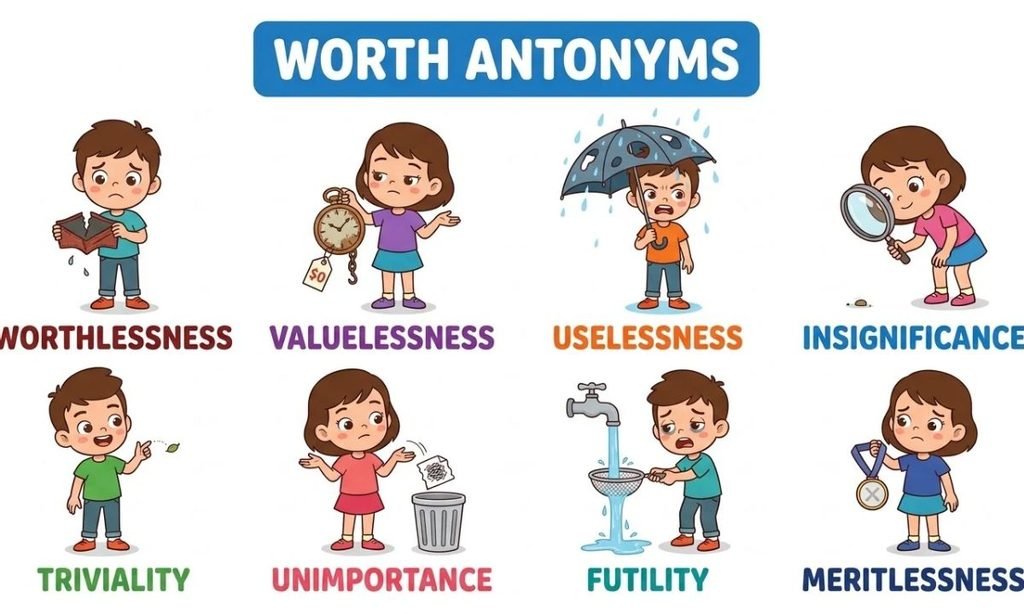
The opposite of worth depends on the sense. For value, the clearest worth antonyms are worthlessness, uselessness, and insignificance. For merit, try unworthiness or demerit. For wealth, poverty and want fit. Choose the antonym that matches the exact meaning you started with, and the contrast will land cleanly.
Frequently Asked Questions
What is another word for worth?
Value is the most common another word for worth, with merit, importance, and benefit close behind.
What are synonyms for worth in terms of value or importance?
Value, merit, significance, utility, and weight all express worth in the sense of importance.
What are words for worth related to price, cost, or wealth?
Valuation, appraisal, price, cost, assets, equity, and net worth cover the financial side of worth.
What is the opposite or antonym of worth?
Worthlessness, uselessness, and insignificance are the most common opposites of worth.
How do you use worthy, valuable, and worthwhile differently?
Worthy means deserving respect, valuable means high in value or use, and worthwhile means repaying the effort you spend.
Conclusion
Choosing among worth synonyms is not a style exercise. It is how you tell your reader exactly what you mean, whether that is a price, a principle, or a person’s place in the world. The right word builds trust, protects dignity, and removes doubt in a single beat. Pick it with care, and your writing will feel clear, fair, and human.
1 thought on “Worth Synonyms: 30 Better Words for Value, Cost, and Merit”