
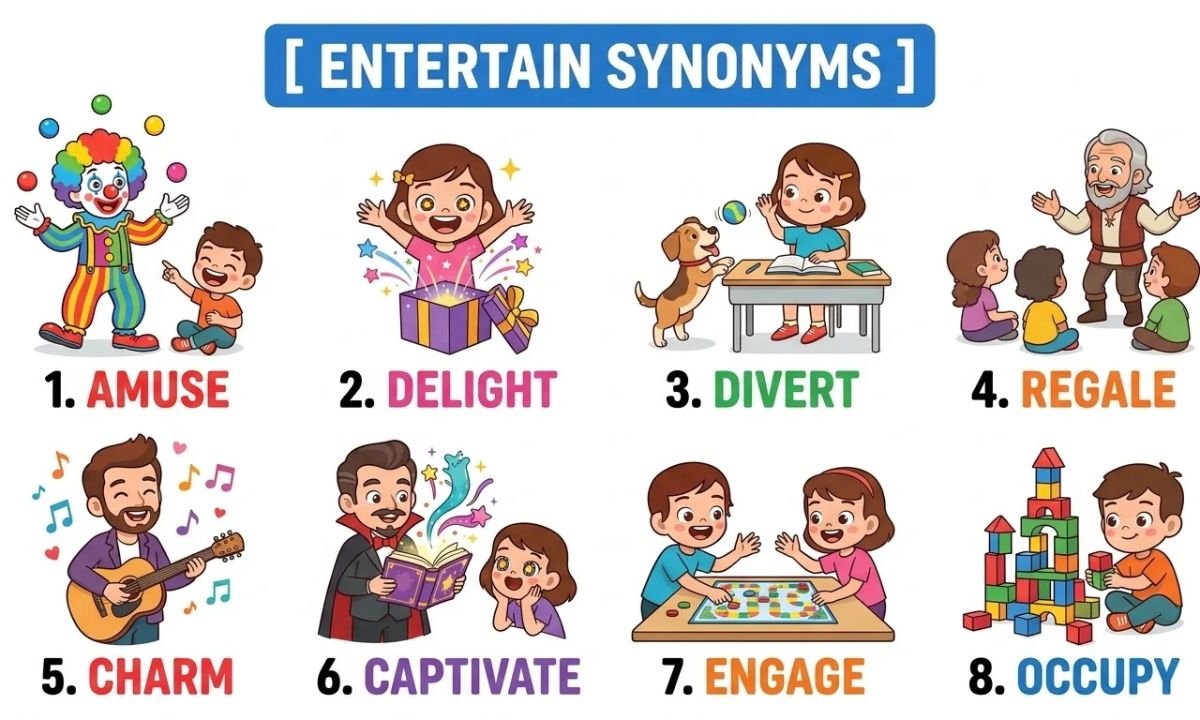
The word entertain does three jobs at once. It can mean to amuse, to host, or to consider an idea. That range is exactly why it often feels vague on the page. A sharper verb tells your reader what you actually mean. This guide gives you another word for entertain in every sense. You get 38 options, each with a clear meaning and real examples.
Core Meanings of Entertain
Most entertain synonyms fall into three groups. Mixing them up is the most common mistake in standard thesauruses. Pick the sense first, then pick the word.
Amusement and Engagement
This is the performance sense. You hold attention through humor, stories, or pleasant activity. Words like amuse, delight, captivate, and divert live here.
Hosting and Hospitality
This is the guest sense. You welcome people, feed them, and look after their comfort. Host, treat, and accommodate fit best.
Thinking and Consideration
This is the mental sense, as in entertain a thought or entertain the possibility. Consider, contemplate, ponder, and harbor all work here.
Entertain vs. Amuse vs. Divert
These three get confused often, so here is the short version. Entertain is the broadest. It often suggests planned or structured amusement, like a show or a dinner party.
Amuse is lighter. It usually comes from a joke, a quirk, or a clever remark. Divert is about relief. You divert someone from worry, boredom, or routine, so the focus is on what they get away from.
When you want a quick test, ask what the audience feels afterward. Laughter points to amuse. Relief points to divert. A full evening of activity points to entertain.
Tone and Register Guide
The right word depends on where it will be read. Use this as a quick filter.
- Formal and academic: gratify, contemplate, deliberate, accommodate, engross, foster.
- Business and editorial: engage, captivate, spark, stimulate, host, consider.
- Casual and conversational: mull over, treat, cheer, charm, regale, indulge.
- Creative and literary: enchant, enthrall, beguile, mesmerize, ruminate.
If a formal word feels stiff when you say it aloud, step down a level. Plain verbs usually win.
Common Collocations and Usage Traps
Some pairings are natural, so lean on them. You entertain guests, entertain a thought, and entertain the possibility of something. You entertain an audience with a story. You do not usually entertain a plan unless you are still weighing it.
A few words shift meaning if you swap them in carelessly:
- Distract sounds negative. It pulls attention away from something that matters.
- Indulge can imply too much, as in spoiling someone or giving in.
- Beguile carries a hint of trickery, so use it with care.
- Occupy can sound like you are just filling time.
- Enthrall is spelled enthral in British English.
Antonyms for Entertain
When you need the opposite, use the same sense groups. For amusement, the opposites are bore, weary, tire, and dull. For hospitality, they are neglect, ignore, and exclude. For ideas, they are reject, dismiss, refuse, and dispel.
Knowing entertain antonyms also helps you check your word choice. If the opposite of your verb is not what you want to avoid, you may have picked the wrong one.
Alternative Phrases for Entertain
Below are 38 words related to entertain, grouped by the feeling they create. Each one shows how it differs from its neighbors.
Amuse
Meaning: Amuse means engaging someone lightly with humor or cleverness, without a full performance. It feels more spontaneous than entertain, like sharing a wry remark while waiting for a delayed train. It lowers tension and builds warmth without demanding much focus.
Usage Examples:
- A quick anecdote can amuse new clients in the first two minutes of a call.
- The dry humor in the onboarding deck managed to amuse even seasoned engineers.
Delight
Meaning: Delight means sparking real joy or pleasant surprise through a thoughtful detail. Where amuse leans on wit, delight leans on warmth, like handing a coworker a fresh coffee before a tough review. It builds goodwill and leaves a lasting good impression.
Usage Examples:
- Small, thoughtful touches can delight users long after they learn the basics.
- The chef chose seasonal ingredients to delight guests with bright flavors.
Captivate
Meaning: Captivate means holding someone’s full attention, as if by a magnetic pull. It is stronger than interest and more deliberate than distract, like a speaker opening with a vivid true story that quiets the room. It anchors attention and builds credibility early.
Usage Examples:
- Clear visual demos captivate prospects far better than dense slide decks.
- Her opening remarks helped captivate a restless afternoon crowd.
Engage
Meaning: Engage means drawing people into active participation or curiosity. Entertain can feel passive, but engage invites two-way energy, like asking a quiet workshop group one sharp question. It creates a safe space and turns listeners into contributors.
Usage Examples:
- Interactive polls engage remote teams during long planning sessions.
- A good hook should engage readers within the first two sentences.
Do not miss this: Synonyms for Dumb: 48 Smarter Words by Context and Tone
Regale
Meaning: Regale means treating people generously with stories, lively talk, or good food. It feels fuller and more festive than simply passing time, like a veteran mentor sharing road stories over dinner after a launch. It signals warm hospitality and strengthens social bonds.
Usage Examples:
- The founders spent the evening regaling interns with lessons from early prototypes.
- He liked to regale dinner guests with the history of classic cinema.
Divert
Meaning: Divert means steering attention away from worry, routine, or boredom toward something lighter. Compared with entertain, it stresses relief and redirection, like putting on a comedy podcast during a stressful commute. It resets mood and gives a tired mind room to breathe.
Usage Examples:
- Short brain breaks divert stressed teams before they hit afternoon burnout.
- A clever puzzle can divert restless travelers during a long layover.
Enchant
Meaning: Enchant means drawing someone in with graceful charm, beauty, or wonder. It is softer and more poetic than captivate, like stepping into a sunlit courtyard garden behind a busy street. It shifts the emotional tone and creates a sense of quiet discovery.
Usage Examples:
- Minimalist packaging can enchant buyers before they read the label.
- Acoustic sets often enchant small crowds in intimate rooms.
Enthrall
Meaning: Enthrall means gripping an audience so deeply that time seems to slip away. It is more intense than engage and suggests sustained absorption, like reading a gripping investigative piece in one sitting. It commands deep focus and builds narrative momentum.
Usage Examples:
- Sharp investigative reporting can enthrall readers in any industry.
- The documentary team set out to enthrall viewers with rare archival footage.
Fascinate
Meaning: Fascinate means sparking intense curiosity about how something works or why it matters. Unlike amuse, it feeds intellectual wonder, like watching a glassblower shape molten glass into a clean vessel. It builds shared curiosity and invites deeper questions.
Usage Examples:
- Behavioral data continues to fascinate product designers.
- Small shifts in language often fascinate editors and linguists alike.
Beguile
Meaning: Beguile means charming someone smoothly until their guard drops. It carries a subtle, persuasive edge, like a calm negotiator easing tension with measured humor. It reduces defensiveness and opens space for an honest talk.
Usage Examples:
- Unhurried, honest prose can beguile readers who skim rushed marketing copy.
- A warm welcome often helps beguile skeptical first-time visitors.
Charm
Meaning: Charm means winning people over through ease, grace, and a likable presence. It is lighter and more personal than impress, like a host greeting guests effortlessly while keeping the room relaxed. It smooths social friction and builds quick rapport.
Usage Examples:
- Directness and warmth often charm audiences more than polished jargon.
- The small café earned loyalty through quiet charm and steady service.
Intrigue
Meaning: Intrigue means stirring curiosity with a hint of mystery or an unexpected angle. It is more subtle and cerebral than excite, like an email subject line that teases a strange finding without giving it away. It pulls readers forward and rewards attention.
Usage Examples:
- Contrarian research findings often intrigue analytical readers.
- A single unanswered question can intrigue a room at the start of a talk.
Mesmerize
Meaning: Mesmerize means holding eyes and minds on a steady, almost hypnotic display. It suggests more stillness and awe than entertain, like watching waves roll onto a quiet shore at dusk. It calms mental noise and centers attention on one point.
Usage Examples:
- Fluid motion graphics can mesmerize visitors on a landing page.
- The pianist mesmerized the hall with quiet phrasing.
Absorb
Meaning: Absorb means pulling someone so fully into a task or story that distractions fade. Unlike distract, it pulls toward meaningful focus, like diving into a good book on a quiet Sunday morning. It supports deep work and sustained concentration.
Usage Examples:
- Practical case studies absorb busy managers more than abstract theory.
- A clear narrative arc helps absorb readers through a complex report.
Engross
Meaning: Engross means occupying someone’s full mental energy with rich detail. It sits close to absorb but feels heavier and more scholarly, like a research team digging into a sharp market shift. It signals seriousness and keeps talks anchored on substance.
Usage Examples:
- The new policy brief seemed to engross the entire committee.
- Detailed teardown posts often engross technical readers for twenty minutes.
Occupy
Meaning: Occupy means keeping someone’s time or attention pleasantly filled. It is practical and neutral next to delight or enchant, like giving kids simple art supplies while you cook dinner. It prevents restlessness and sets clear expectations about time.
Usage Examples:
- Structured warm-up tasks help occupy early arrivals before a meeting starts.
- Simple activity kits occupy young passengers on long regional flights.
Please
Meaning: Please means giving satisfaction by meeting expectations cleanly. It is plain and polite compared with thrill or dazzle, like sending a client report early with every question already answered. It builds trust through reliability and quiet competence.
Usage Examples:
- Clear navigation and fast load times please almost every web visitor.
- The streamlined checkout flow aims to please repeat customers.
Gratify
Meaning: Gratify means fulfilling a desire or expectation in a rewarding way. It feels a little more formal and earned than please, like watching a community garden bloom after months of care. It validates effort and reinforces shared purpose.
Usage Examples:
- Timely feedback can gratify team members who worked behind the scenes.
- Publishing thorough guides helps gratify readers who want real answers.
Cheer
Meaning: Cheer means lifting low spirits and bringing some brightness into a heavy moment. Unlike entertain, it targets mood recovery, like bringing pastries to a tired team after a demanding sprint. It restores morale and shows real empathy.
Usage Examples:
- A short note of thanks can cheer a colleague after a tough week.
- Bright daylight and open seating help cheer up a winter office.
Comfort
Meaning: Comfort means easing distress or fatigue with steady care and reassurance. It is gentler and more supportive than amuse, like offering a quiet room and water to a nervous job candidate. It lowers anxiety and creates emotional safety.
Usage Examples:
- Clear timelines comfort clients during complex system migrations.
- Familiar routines often comfort teams going through change.
Soothe
Meaning: Soothe means calming agitation or sharp emotion back to a steady baseline. It works like a balm, the opposite of a lively show, like lowering your voice and slowing down on a tense customer call. It de-escalates conflict and restores clear thinking.
Usage Examples:
- Calm, open updates soothe anxious stakeholders during outages.
- Soft lighting and plain language help soothe stressed readers.
Host
Meaning: Host means welcoming guests and managing the space, flow, and comfort of a gathering. It moves entertain from performance to care, like greeting visitors at the door and making introductions. It makes people feel included and sets a generous tone.
Usage Examples:
- Our team plans to host monthly roundtables for local designers.
- Good moderators host a discussion so every voice gets fair space.
Accommodate
Meaning: Accommodate means adjusting space, schedules, or needs so guests feel supported. It puts practical care ahead of flashy entertainment, like offering quiet seating and dietary options at a team lunch. It signals respect and removes hidden barriers.
Usage Examples:
- The venue can accommodate up to eighty guests across two rooms.
- Flexible start times accommodate parents juggling the morning school run.
Treat
Meaning: Treat means offering something special, like a meal or an outing, as a gesture of goodwill. It feels warmer and more generous than serve, like taking the whole crew to lunch after a big milestone. It celebrates shared wins and strengthens loyalty.
Usage Examples:
- The studio likes to treat visiting speakers to dinner by the waterfront.
- We often treat subscribers to early access before public launches.
Read this at once: Synonyms for Present: 40 Better Words by Meaning and Context
Pamper
Meaning: Pamper means indulging someone with extra comfort, luxury, or attentive care. It goes further than treat and centers on physical ease, like booking a quiet spa afternoon after a grueling trip. It signals high care and gives people permission to rest.
Usage Examples:
- Boutique hotels often pamper guests with quiet rooms and local treats.
- One slow weekend to pamper yourself can reset your creative energy.
Indulge
Meaning: Indulge means giving in to a pleasure or playful idea without strict restraint. It can sound lighthearted or a little self-aware, like spending an extra hour testing wild headline ideas before editing them down. It invites creative freedom while leaving room for discipline.
Usage Examples:
- Writers sometimes indulge a playful metaphor before choosing a cleaner line.
- Friday afternoons let the team indulge in side experiments.
Wine and Dine
Meaning: Wine and dine means hosting someone with a nice meal and good company, usually to build a relationship. It is more social and a bit more strategic than treat, like taking a new partner to a long dinner before a deal. It shows effort and opens the door to rapport.
Usage Examples:
- The agency likes to wine and dine key clients after a successful quarter.
- She planned to wine and dine the visiting board members on their first night.
Consider
Meaning: Consider means weighing an idea, claim, or option carefully before deciding. It captures the mental sense of entertain with crisp precision, like reviewing two vendor proposals against budget and risk. It projects sound judgment and structure.
Usage Examples:
- Editors should consider reader intent before expanding any word list.
- Please consider these constraints before finalizing the launch schedule.
Contemplate
Meaning: Contemplate means looking closely at an idea or path over time. It feels deeper and more reflective than consider, like sitting with a notebook to weigh a major career change. It slows rushed choices and encourages long-view clarity.
Usage Examples:
- Leaders often contemplate long-term shifts well before quarterly targets change.
- Designers should contemplate how new features affect daily habits.
Ponder
Meaning: Ponder means turning a question over in your mind with unhurried care. It has a quiet, thoughtful tone compared with debate, like walking alone after a meeting to think about what went unsaid. It deepens insight and prevents knee-jerk reactions.
Usage Examples:
- Readers often ponder a sharp closing line long after finishing a piece.
- Take a moment to ponder whether every section earns its space.
Mull
Meaning: Mull means rolling an idea around gently in your thoughts, often as mull over. It sounds more casual than contemplate, like talking through a tricky naming choice over coffee with a trusted peer. It keeps options open while clarity forms on its own.
Usage Examples:
- She decided to mull over the feedback before sending a revision.
- Teams often mull several angles before picking a campaign theme.
Ruminate
Meaning: Ruminate means chewing over a thought or memory repeatedly to find meaning. It is more deliberate and intense than mull, like revisiting an awkward exchange to understand what caused the friction. It sharpens self-awareness when kept constructive rather than circular.
Usage Examples:
- Experienced editors ruminate on structure long before polishing sentences.
- Give yourself space to ruminate on lessons learned after each launch.
Deliberate
Meaning: Deliberate means weighing pros, cons, and trade-offs before making a formal choice. It feels structured and decisive next to casual pondering, like a hiring panel reviewing candidates against clear criteria. It builds fairness and confidence in the outcome.
Usage Examples:
- The board plans to deliberate on the budget proposal next Tuesday.
- Deliberate word choice prevents ambiguity in high-stakes copy.
Harbor
Meaning: Harbor means holding a thought, hope, or feeling quietly in mind over time. It matches the inner, protective sense of entertain, like quietly harboring doubts about a timeline while you check early milestones. It names unspoken states clearly without melodrama.
Usage Examples:
- Few founders admit they harbor early doubts about product-market fit.
- Try not to harbor old frustrations when starting a fresh collaboration.
Foster
Meaning: Foster means encouraging growth, openness, or good habits so they take root naturally. It feels constructive and forward-looking, like setting clear norms so junior writers share rough drafts early. It builds trust and compounds skill across a team.
Usage Examples:
- Clear editorial standards foster stronger writing in every department.
- Small group discussions often foster honest feedback.
Nurture
Meaning: Nurture means tending an idea, relationship, or talent patiently as it develops. It is warmer and more hands-on than foster, like mentoring a new copywriter through weekly edits and calm encouragement. It builds lasting skill and deep loyalty.
Usage Examples:
- Good editors nurture new voices without erasing their natural style.
- Consistent follow-up helps nurture long-term client relationships.
Spark
Meaning: Spark means igniting sudden interest, energy, or fresh thinking. It is brisk and energizing compared with steady entertainment, like sharing one surprising chart that changes how a room sees a problem. It creates momentum and opens the door to new ideas.
Usage Examples:
- A bold opening example can spark curiosity in a crowded feed.
- Honest questions often spark better brainstorming than rigid agendas.
Stimulate
Meaning: Stimulate means activating curiosity, lively thought, or creative drive. It feels more analytical and energizing than amuse, like reading a sharp essay that challenges your assumptions about remote work. It sharpens focus and pushes thinking past easy clichés.
Usage Examples:
- Cross-team critiques can stimulate fresh solutions to old bottlenecks.
- Nuanced vocabulary guides help stimulate more precise writing.
Frequently Asked Questions
What is another word for entertain?
Strong options include amuse, delight, captivate, engage, regale, and divert, depending on the tone you want.
How is entertain different from amuse and divert?
Entertain is the broadest term, amuse suggests light humor, and divert stresses relief from worry or boredom.
What are antonyms for entertain?
Common entertain antonyms include bore, weary, neglect, ignore, reject, and dismiss, depending on the sense.
What are good synonyms for entertain guests or entertain an idea?
For guests, use host, treat, or accommodate, and for an idea, use consider, contemplate, or ponder.
Can entertain mean hosting rather than performing?
Yes, entertain often means welcoming and feeding guests, and host or wine and dine make that meaning clearer.
Conclusion
The right verb does more than fill a slot. It tells your reader whether you are performing, hosting, or thinking, and it sets the emotional tone before the sentence ends. When you swap a vague entertain for a precise choice like amuse, host, or consider, your writing gets cleaner, your intent gets clearer, and your reader feels the difference.
3 thoughts on “Entertain Synonyms: 38 Better Words by Context and Tone”