Treasure is a strong word, but it can’t do every job. Sometimes you mean gold in a chest. Sometimes you mean a child, a memory, or a ring. Sometimes you mean to love something and keep it safe. This treasure word list sorts synonyms for treasure by meaning, tone, and use. You get 30 clear options, two example sentences each, and notes on what to avoid. Pick the word that fits, and your writing gets sharper.
What Is Another Word for Treasure?
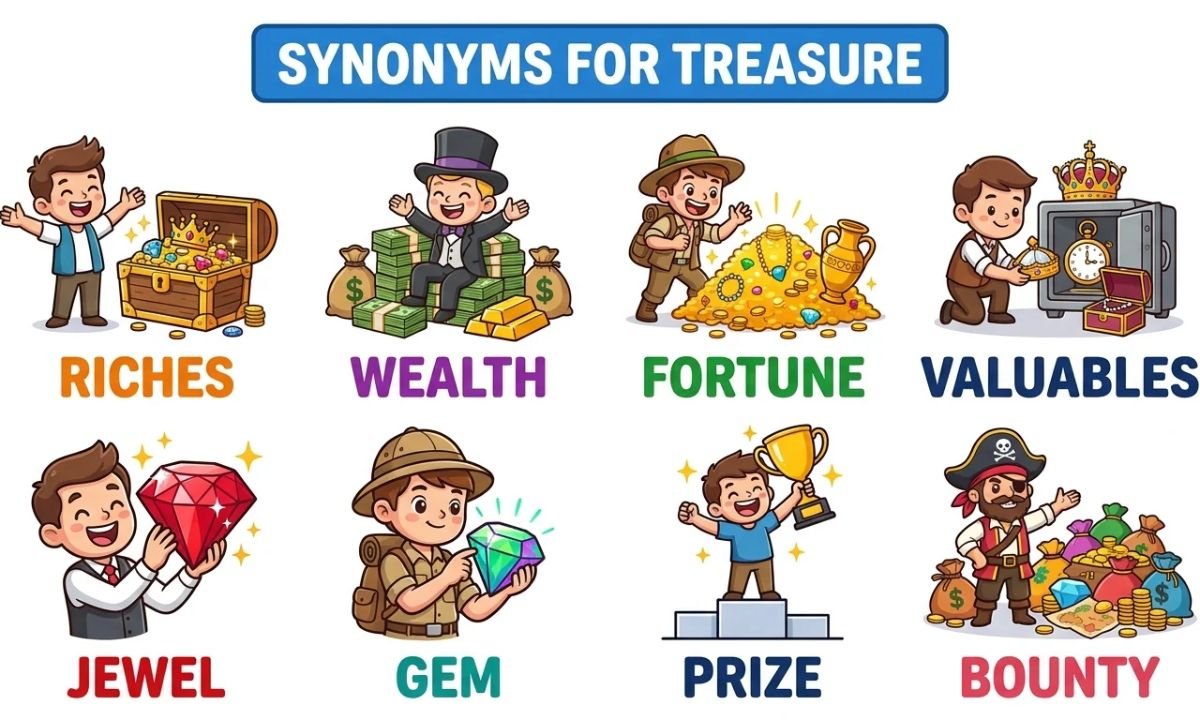
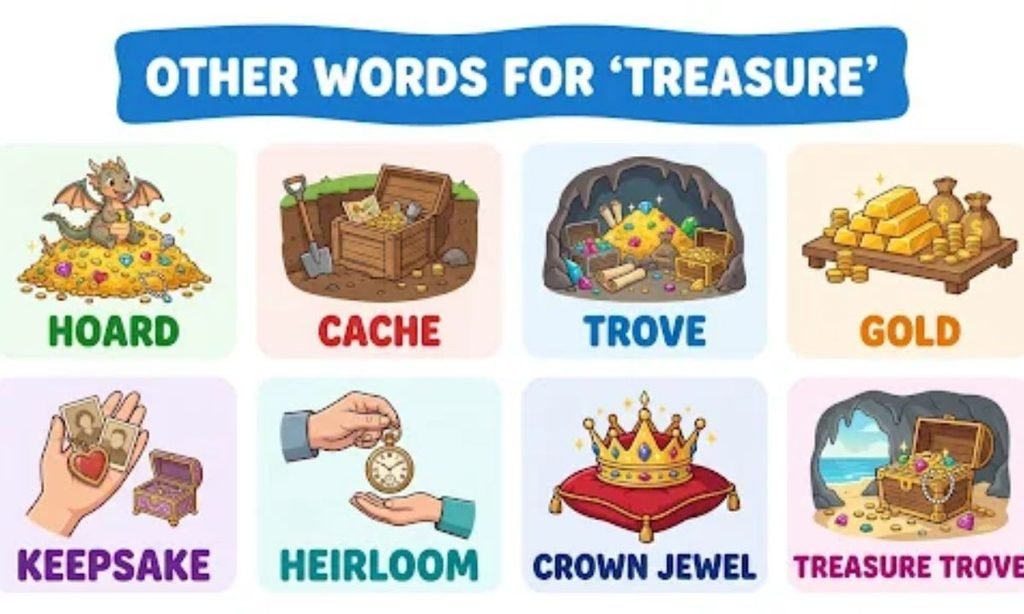
It depends on what you mean. For wealth, try riches, fortune, or bullion. For a valuable object, try gem, jewel, or heirloom. For a loved person, try pride and joy. For the verb, try cherish, value, or safeguard.
The best synonym for treasure is the one that matches your meaning, not the one that sounds fanciest. Each entry below shows the part of speech, the nuance, and two sentences you can borrow.
Looking for treasure synonyms and antonyms? The opposites are just as useful. As a noun, the opposite of treasure is junk, trash, or rubbish. As a verb, it is neglect, discard, or disregard.
Treasure as a Noun and as a Verb
As a noun, treasure means wealth, a valuable object, or a person you hold dear. The plural is treasures. Common pairings include buried treasure, hidden treasure, national treasure, and treasure trove.
As a verb, treasure means to value something highly or to store it safely. Its forms are treasures, treasured, and treasuring. “Treasured” also works as an adjective, as in a treasured gift.
Treasure vs. cherish: treasure stresses guarding something precious, while cherish stresses love and tender care. Treasure vs. wealth: wealth is a general measure of what someone owns, while treasure points to a specific valuable thing or hoard, often with feeling attached.
How to Choose the Right Treasure Synonym
Check three things: part of speech, tone, and connotation.
Formal choices include fortune, bullion, safeguard, and revere. Poetic choices include pearl of great price, crown jewel, and hold dear. Casual choices include stash and pride and joy. Positive synonyms for treasure, like cherish, prize, and adore, suit vows, tributes, and thank-you notes.
Here is a quick test. Swap the new word into your sentence and read it aloud. If it sounds natural, keep it.
Synonyms to Avoid: When “Treasure” Doesn’t Fit
Some words show up in lists but change your meaning. Loot, booty, and plunder suggest stolen goods. Cash and money are too narrow and too plain. Gold is literal, so use it only for the metal. Hoard can sound greedy.
Be careful with invented phrases such as “radiant hoard” or “heart’s reward.” They read well, but they are not dictionary synonyms. Use them in poetry, not in definitions.
Riches
Core Definition & Nuance: Riches is a noun for great wealth, suggesting abundance beyond a normal income. It fits a news story about a family that inherited a large estate.
Emotional Value & Benefit: Riches sounds weighty without sounding greedy. It tells the reader the wealth is large and real. Your tone stays grounded and clear.
- Usage Examples:
- The explorers dreamed of the riches buried beneath the island.
- Her riches came from decades of patient investing.
Wealth
Core Definition & Nuance: Wealth is a noun for the total value of what a person or place owns. It is broader and calmer than treasure, which usually points to one valuable thing. It fits a report on how a city built its economy.
Emotional Value & Benefit: Wealth feels measured and neutral. It lets you talk about abundance without drama. Readers trust a steady tone.
- Usage Examples:
- The region’s wealth grew with the harbor trade.
- He shared his wealth through scholarships.
Fortune
Core Definition & Nuance: Fortune is a noun for a very large sum of money, and it often hints at luck or a dramatic rise. It fits a story about someone who struck gold in business.
Emotional Value & Benefit: Fortune adds a little story to the idea of wealth. Readers sense a journey behind the money. That makes your writing feel alive.
- Usage Examples:
- The inventor made a fortune from a single patent.
- They lost the family fortune in one bad decade.
Valuables
Core Definition & Nuance: Valuables is a plural noun for personal items worth money, such as jewelry or watches. It is practical and plain, and it carries less romance than treasure. It fits a hotel notice about locking items in the safe.
Emotional Value & Benefit: Valuables feel clear and safe. It says what you mean without any fuss. Instructions land faster this way.
- Usage Examples:
- Please leave your valuables in the room safe.
- The burglar took cash but ignored the other valuables.
Hoard
Core Definition & Nuance: Hoard is a noun for a hidden stash of valuables, and it can also be a verb. It leans toward secrecy and sometimes greed, which treasure does not. It fits a news item about a farmer who digs up old coins.
Emotional Value & Benefit: Hoard adds mystery and a hint of tension. It makes readers lean in. Use it when the collecting itself matters.
- Usage Examples:
- Archaeologists uncovered a hoard of silver coins.
- Squirrels hoard acorns before winter.
Cache
Core Definition & Nuance: Cache is a noun for a hidden or stored supply of valuable things. It sounds more practical than a hoard and often suggests a stash set aside for later use. It fits a hiker who finds a hidden box of supplies.
Emotional Value & Benefit: Cache feels precise and a little technical. It tells the reader the items were stored on purpose. That adds clarity.
- Usage Examples:
- Police found a cache of stolen jewelry in the garage.
- The museum keeps a cache of rare manuscripts in climate-controlled storage.
Trove
Core Definition & Nuance: Trove is a noun for a collection of valuable things that has been found. It stresses discovery, and it is the heart of the phrase “treasure trove.” It fits someone who finds a box of old letters in an attic.
Emotional Value & Benefit: Trove brings a spark of delight. The reader feels the thrill of finding something. Your tone turns warm and curious.
- Usage Examples:
- The archive is a trove of family history.
- She found a trove of vintage photos in the basement.
Delight in this: Synonyms for Caring: 32 Better Words and Examples
Bounty
Core Definition & Nuance: Bounty is a noun for a generous amount of something valuable, often from nature or a successful effort. It is warmer and more plentiful than treasure. It fits a farmer’s market table piled high after a good harvest.
Emotional Value & Benefit: Bounty feels generous and grateful. It frames abundance as a gift. Readers feel welcome.
- Usage Examples:
- The valley’s autumn bounty filled every stall.
- The team returned from the trip with a bounty of new ideas.
Bullion
Core Definition & Nuance: Bullion is a noun for gold or silver in bars or ingots. It is exact and financial, whereas treasure is broad and emotional. It fits a news report on a central bank’s gold reserves.
Emotional Value & Benefit: Bullion sounds exact and serious. It removes any guesswork about what the wealth is. Precision builds trust.
- Usage Examples:
- The vault held several tons of gold bullion.
- Investors bought silver bullion as a hedge against inflation.
Gem
Core Definition & Nuance: Gem is a noun for a precious stone or for any person or thing of rare quality. It points to one excellent item, not a whole collection. It fits a friend who recommends a small bakery that turns out to be superb.
Emotional Value & Benefit: Gem lets you praise something without exaggeration. It feels bright and friendly. Your praise sounds sincere.
- Usage Examples:
- The tiny bookstore is a hidden gem.
- Our newest hire is a gem on the support team.
Jewel
Core Definition & Nuance: Jewel is a noun for a cut precious stone or a prized thing, and it feels a bit more elegant than gem. It fits a travel writer describing a historic theater as the jewel of a small town.
Emotional Value & Benefit: Jewel adds polish and pride. It signals that something is cared for and admired. Readers sense quality.
- Usage Examples:
- The old library is the jewel of the neighborhood.
- She wore a single jewel at her collar.
Prize
Core Definition & Nuance: Prize works as a noun for something won or highly desired, and as a verb meaning to value greatly. It stresses worth that others also want. It fits a collector who spent years hunting for one rare record.
Emotional Value & Benefit: A prize makes the value feel earned. The reader understands effort stands behind it. That gives your sentence weight.
- Usage Examples:
- The signed first edition was the prize of his collection.
- Customers prize our fast and honest service.
Heirloom
Core Definition & Nuance: Heirloom is a noun for a valuable object passed down through a family. It is tied to history and relationships, which treasure alone is not. It fits a grandmother handing her wedding ring to a granddaughter.
Emotional Value & Benefit: Heirloom carries memory and belonging. It tells readers the value is personal, not just financial. That creates quiet warmth.
- Usage Examples:
- The quilt is a family heirloom stitched in 1920.
- He kept the watch as an heirloom from his father.
Keepsake
Core Definition & Nuance: Keepsake is a noun for a small item kept in memory of a person or moment. It is gentle and personal, and its value is rarely money. It fits a pressed flower saved from a wedding day.
Emotional Value & Benefit: A keepsake makes the reader feel the memory. It honors small things. That builds connection.
- Usage Examples:
- She kept the ticket stub as a keepsake of their first date.
- The locket is a keepsake from her travels.
Crown Jewel
Core Definition & Nuance: Crown jewel is a noun phrase for the single most valuable or admired item in a larger set. It ranks things, which treasure does not. It fits a company describing its flagship product.
Emotional Value & Benefit: Crown jewel signals clear priority. Readers know what matters most. That sharpens your message.
- Usage Examples:
- The painting is the crown jewel of the museum’s collection.
- Our mobile app is the crown jewel of the product line.
Pride and Joy
Core Definition & Nuance: Pride and joy is an idiom for a person or thing that makes you proud and happy. It is warm and casual, and it is more personal than treasure. It fits a parent talking about a child or a driver showing off a restored car.
Emotional Value & Benefit: Pride and joy sounds open and affectionate. It lets you show feeling without stiffness. Readers relax.
- Usage Examples:
- His restored motorcycle is his pride and joy.
- The garden is her pride and joy.
Apple of One’s Eye
Core Definition & Nuance: Apple of one’s eye is an idiom for a person who is deeply loved above others. It almost always points to a person, not an object. It fits a grandfather speaking about his youngest grandchild.
Emotional Value & Benefit: This phrase feels tender and old-fashioned. It adds a classic tone to toasts and tributes. People feel seen.
- Usage Examples:
- His granddaughter was the apple of his eye.
- She was the apple of her mentor’s eye.
Pearl of Great Price
Core Definition & Nuance: Pearl of great price is a literary phrase for something so valuable it is worth giving up everything else. It is more poetic and more serious than treasure. It fits a eulogy that praises a lifelong friendship.
Emotional Value & Benefit: This phrase lifts a moment into something formal and reflective. It gives your words dignity. Use it sparingly for effect.
- Usage Examples:
- To him, honest friendship was a pearl of great price.
- She called her freedom a pearl of great price.
You will love this: Synonyms for Compassionate: 30 Better Words and When to Use Them
Priceless
Core Definition & Nuance: Priceless is an adjective for something worth more than any amount of money. It describes value, where treasure names the thing itself. It fits a photo of a late relative that cannot be replaced.
Emotional Value & Benefit: Priceless tells the reader that money is the wrong measure. It creates instant respect for the object. Feelings come through clearly.
- Usage Examples:
- The handwritten recipes are priceless to our family.
- Their advice was priceless during the first year.
Cherish
Core Definition & Nuance: Cherish is a verb meaning to hold something dear with love and care. It leans toward affection, while treasure leans toward protection. It fits a couple reflecting on years together.
Emotional Value & Benefit: Cherish feels sincere and safe. It lets you speak about love without sounding stiff. Readers feel the care.
- Usage Examples:
- I cherish every letter she wrote me.
- They cherish the quiet mornings at the lake.
Value
Core Definition & Nuance: Value is a verb meaning to think something is important or worth a lot. It is plain and professional, with less romance than treasure. It fits a manager thanking a team in a performance review.
Emotional Value & Benefit: Value sounds steady and respectful. It works in any workplace. It keeps feeling clear without making things awkward.
- Usage Examples:
- We value your feedback and read every comment.
- She values honesty above speed.
Appreciate
Core Definition & Nuance: Appreciate is a verb meaning to recognize the worth of something and feel grateful for it. It stresses noticing quality, not guarding it. It fits a customer thanking a support agent who stayed late.
Emotional Value & Benefit: Appreciate makes people feel noticed. It is polite and warm at once. That builds goodwill fast.
- Usage Examples:
- I appreciate the time you took to explain the process.
- The committee appreciates your thoughtful proposal.
Adore
Core Definition & Nuance: Adore is a verb meaning to love deeply and show it openly. It is stronger and more playful than treasure. It fits a person gushing about a favorite coffee shop or a pet.
Emotional Value & Benefit: Adore feels bright and honest. It signals plain enthusiasm. Readers smile along with you.
- Usage Examples:
- We adore our neighbors and their noisy dog.
- She adores the old movie theater on Main Street.
Revere
Core Definition & Nuance: Revere is a verb meaning to hold in deep respect and near awe. It is formal and often used for people, ideas, or traditions. It fits a student speaking about a teacher who changed their path.
Emotional Value & Benefit: Revere raises the tone with respect. It signals that the subject matters deeply. Your writing earns weight.
- Usage Examples:
- Many in the town revere the founder of the school.
- He reveres the craft of hand-bound books.
Safeguard
Core Definition & Nuance: Safeguard is a verb meaning to protect something valuable from harm or loss. It focuses on action, not feeling. It fits a company protecting customer records or a family protecting an old photo album.
Emotional Value & Benefit: Safeguard tells readers you are in control. It builds calm and confidence. People feel safer.
- Usage Examples:
- We safeguard your data with strict access rules.
- She safeguarded the letters in a fireproof box.
Preserve
Core Definition & Nuance: Preserve is a verb meaning to keep something in its original state over time. It adds a sense of duty to the past that treasure lacks. It fits a historian restoring a fragile map.
Emotional Value & Benefit: Preserve gives the reader a sense of continuity. It shows respect for what came before. That adds quiet purpose.
- Usage Examples:
- The society works to preserve the town’s oldest buildings.
- They preserved her recordings for future generations.
Hold Dear
Core Definition & Nuance: Hold dear is a verb phrase meaning to care for something deeply. It is gentle and a little formal, and it suits speeches and personal notes. It fits a wedding vow or a farewell letter.
Emotional Value & Benefit: Hold dear feels heartfelt and unhurried. It slows the reader down. That makes the sentiment land.
- Usage Examples:
- These are the memories I hold dear.
- We hold dear the values our parents taught us.
Stash
Core Definition & Nuance: Stash works as a verb or noun for something hidden away for safekeeping, and it sounds casual. It lacks the emotion of treasure and often feels playful. It fits a kid hiding candy in a sock drawer.
Emotional Value & Benefit: Stash keeps things light and relaxed. It lowers the stakes. Readers feel at ease.
- Usage Examples:
- He kept a stash of spare keys in the shed.
- She stashed her savings in a tin box.
Stockpile
Core Definition & Nuance: Stockpile is a verb or noun for building a large reserve of something for later use. It is practical and often tied to supplies. It fits a family stocking up before a storm.
Emotional Value & Benefit: Stockpile signals planning and preparedness. It tells readers someone is thinking ahead. That reads as reliable.
- Usage Examples:
- The clinic stockpiled medicine before the winter rush.
- Collectors stockpile rare coins when prices dip.
Store
Core Definition & Nuance: Store is a verb meaning to put something valuable in a safe place for later. It is neutral and focused on the act, not the feeling. It fits someone placing old family papers in a labeled box.
Emotional Value & Benefit: Store keeps your meaning simple and direct. It avoids hype. Clear wording helps readers follow along.
- Usage Examples:
- We store the original deeds in a locked cabinet.
- He stores his grandfather’s tools in the garage.
Frequently Asked Questions
What is another word for treasure?
Common alternatives include riches, gem, jewel, heirloom, and cherish, depending on whether you mean wealth, a valuable object, or the act of valuing something.
What is a synonym for treasure as a verb?
Cherish, value, prize, and safeguard all work as verbs, with cherish leaning toward love and safeguard leaning toward protection.
Is “loot” a synonym for treasure?
Only loosely, because loot suggests stolen goods and carries a negative tone that treasure does not.
What is the difference between treasure and cherish?
Treasure stresses guarding something precious, while cherish stresses loving it and caring for it.
What is a poetic word for treasure?
Pearl of great price, crown jewel, and hold dear all give a more poetic or literary feel.
Conclusion
The right synonym for treasure does more than swap one word for another: it sets the tone, sharpens the meaning, and tells your reader how to feel. Riches and bullion bring precision, heirloom and keepsake bring memory, and cherish and safeguard bring care and control. Choose by meaning first, check the tone and part of speech, and your writing will sound clear, steady, and human.
1 thought on “Synonyms for Treasure: 30 Better Words and How to Use Them”