

The word “dumb” is blunt, vague, and often unfair. It names no specific problem, so it teaches the reader nothing. Better words sharpen your point and protect your credibility.
They also keep feedback professional and your fiction vivid. This guide gives you 48 precise alternatives, sorted by tone and purpose. Pick the word that fits the moment, not the one that fits the habit.
The Two Core Meanings of “Dumb”
“Dumb” carries two separate senses, and mixing them causes most word-choice errors.
Meaning 1: Lacking Judgment or Intelligence
This is the modern, casual sense. It points to foolish choices, slow understanding, or poor reasoning. Most synonyms for stupid and most polite words for dumb live here. Words such as unwise, dense, and inane all belong to this group.
Meaning 2: Temporarily Silent or Unable to Speak
This is the older sense. It describes someone who cannot or does not speak, often from shock, awe, or fear. Words such as speechless, mute, and tongue-tied cover it. Use them when you mean silence, never when you mean low intelligence.
Why Writers Avoid the Word “Dumb”
The term has a history worth knowing. For centuries, “dumb” labeled people who could not speak, including many Deaf people. That label wrongly tied speech differences to weak intellect. Many readers now see the insult as ableist, and inclusive language guides advise against it.
There is a practical reason too. Vague insults weaken writing. A precise word names the actual flaw, which makes your message clearer and harder to dispute.
How to Choose Another Word for Dumb
Start with one question: are you judging a person or a decision?
- Decision: choose ill-advised, shortsighted, or unwise. These critique an action and leave the person intact.
- Person: choose dense, obtuse, or naive. These describe traits, so use them carefully and mostly in fiction.
- Idea: choose inane, half-baked, or impractical. These attack the thinking, not the thinker.
- Silence: choose speechless, mute, or tongue-tied.
Then check your audience. Workplace emails need diplomacy. Dialogue needs voice. Reports need neutrality.
Polite and Professional Synonyms for Dumb
These polite words for dumb are workplace safe. They critique poor decisions without insulting anyone.
Ill-Advised
Meaning: Poorly counseled
Ill-advised describes an action taken without good guidance, so it blames the choice rather than the chooser. Picture a manager who launches a product the week before a holiday freeze. The word lets you criticize firmly while keeping the relationship intact.
Usage Examples:
- The team agreed that an unannounced price change was ill-advised.
- She called the rushed merger ill-advised but not reckless.
Shortsighted
Meaning: Lacking foresight
Shortsighted targets planning that ignores long-term consequences, unlike foolish, which implies general silliness. Think of a company that cuts training budgets to hit a quarterly goal. It frames the error as a timing problem, which keeps the discussion constructive.
Usage Examples:
- Cutting maintenance spending now is a shortsighted move.
- The board warned that a shortsighted hiring freeze would hurt growth.
Careless
Meaning: Insufficiently attentive
Careless points to a lapse in attention rather than a lapse in intellect. Imagine a colleague who sends a report with the wrong figures. It signals that the mistake is fixable, which preserves the person’s dignity.
Usage Examples:
- A careless error in the spreadsheet delayed the audit.
- He apologized for his careless reply to the client.
Unwise
Meaning: Showing poor judgment
Unwise is the gentlest formal alternative, milder than foolish and far less personal. Consider a friend who lends savings to an unreliable business partner. Its calm tone invites reflection instead of defensiveness.
Usage Examples:
- Signing the contract without legal review would be unwise.
- It seemed unwise to promise a date we could not meet.
Imprudent
Meaning: Lacking caution
Imprudent suggests a failure to weigh risk, where unwise suggests a failure to weigh anything at all. Picture an investor who puts everything into one volatile stock. The word sounds measured and authoritative, which raises the credibility of your critique.
Usage Examples:
- The committee judged the loan imprudent given the company’s debt.
- An imprudent shortcut put the whole project at risk.
Naive
Meaning: Innocently trusting
Naive implies inexperience rather than low intelligence, so it softens a harsh judgment. Think of a new graduate who believes every promise in a job offer. It frames the gap as learnable, which builds psychological safety.
Usage Examples:
- It was naive to expect approval without a budget.
- Her naive assumptions disappeared after the first negotiation.
Misguided
Meaning: Wrongly directed
Misguided suggests good intent paired with a bad plan. Picture a volunteer who organizes a cleanup in the wrong park. The word credits the motive while correcting the method, which keeps morale high.
Usage Examples:
- The campaign was misguided but sincere.
- His misguided attempt to help only created more work.
Uninformed
Meaning: Lacking information
Uninformed blames missing facts instead of missing brains, so it is the most neutral choice here. Imagine a customer who criticizes a policy they never read. It points toward a solution: share the information.
Usage Examples:
- The uninformed opinion circulated widely before the facts emerged.
- We should brief stakeholders so they are not uninformed.
Diplomatic Phrases for Corporate Feedback
Competitors often list formal insults. Real offices need tactical language for honest feedback that stays professional.
Suboptimal
Meaning: Less than ideal
Suboptimal replaces a verdict with a measurement, implying a better option exists. Picture a vendor whose delivery times keep slipping. It keeps meetings analytical and keeps emotion out of the room.
Usage Examples:
- The current onboarding flow is suboptimal for new users.
- Our suboptimal results point to a process issue, not a people issue.
Misaligned
Meaning: Out of sync
Misaligned says two things do not match, such as a plan and a goal, without saying who erred. Think of a sales team promising features engineering never planned. It spreads responsibility and opens a path to alignment.
Usage Examples:
- Our timelines are misaligned with the client’s launch.
- The proposal feels misaligned with the stated priorities.
Unvetted
Meaning: Not verified
Unvetted flags an idea that has not been tested, which is different from an idea that is bad. Imagine a coworker pitching a strategy built on unchecked data. It requests due diligence without accusation.
Usage Examples:
- We cannot ship an unvetted vendor into production.
- The unvetted claims need sources before publication.
Half-Baked
Meaning: Incompletely developed
Half-baked is friendly but pointed: the idea has potential and needs more time. Picture a brainstorm where a promising concept lacks a budget. It encourages iteration instead of shutting the idea down.
Usage Examples:
- The pitch was half-baked, but the core insight was strong.
- Let’s refine this half-baked plan before the review.
Underdeveloped
Meaning: Not fully built
Underdeveloped is the most professional cousin of half-baked and suits written reviews. Think of a strategy memo with a vision and no metrics. It tells the author exactly where to invest effort.
Usage Examples:
- The risk section feels underdeveloped.
- An underdeveloped timeline weakened the proposal.
Impractical
Meaning: Not workable
Impractical judges feasibility, not intelligence. Imagine a plan that needs three times the available staff. It keeps debate focused on resources and reality.
Usage Examples:
- A daily full audit is impractical with our current team.
- The idea is clever but impractical at this scale.
Descriptive Synonyms for Creative Writing
Fiction needs texture. These words build character through precise shades of limited understanding.
Words for Naive or Uninformed Characters
Gullible
Meaning: Easily deceived
Gullible describes someone who believes too readily, unlike naive, which describes inexperience. Picture a character who wires money to a stranger’s sob story. It sets up plot vulnerability and invites reader concern.
Usage Examples:
- The gullible clerk believed every rumor in the office.
- A gullible heir made the con artist’s work easy.
Green
Meaning: Inexperienced
Green suggests fresh, untested talent rather than weak intellect. Think of a rookie detective who contaminates a crime scene. It signals growth ahead, which gives the arc somewhere to go.
Usage Examples:
- The green recruit froze at his first real emergency.
- She was green but eager to learn.
Unworldly
Meaning: Sheltered, unsophisticated
Unworldly implies a protected upbringing, not a slow mind. Imagine a farm boy lost in a metropolitan subway. It adds gentle charm and cultural contrast to a scene.
Usage Examples:
- His unworldly questions made the diplomats smile.
- The unworldly novice trusted every stranger.
Credulous
Meaning: Overly believing
Credulous is the literary form of gullible, ideal for narration. Picture a villager who accepts the traveling merchant’s miracle cure. It lends a formal, observant tone that frames the character with distance.
Usage Examples:
- The credulous audience cheered every false promise.
- A credulous mind is an open door for a swindler.
Please read this soon: Synonyms for Present: 40 Better Words by Meaning and Context
Oblivious
Meaning: Unaware
Oblivious focuses on what a character fails to notice, rather than what they fail to understand. Think of a man chatting happily while his date quietly leaves. It creates comedy and dramatic irony in a single beat.
Usage Examples:
- He was oblivious to the tension in the room.
- An oblivious driver drifted across two lanes.
Words for Stubborn or Slow-Witted Characters
Dense
Meaning: Slow to grasp
Dense implies someone impervious to hints, which is narrower than a general insult. Picture a friend who misses every obvious clue about a surprise party. It conveys frustration with humor rather than cruelty.
Usage Examples:
- She was too dense to see she had been dismissed.
- Don’t be dense; the answer is in the second paragraph.
Obtuse
Meaning: Deliberately slow
Obtuse suggests a mind that resists understanding, often by choice. Think of an official who ignores a clear policy memo. It adds an edge of irritation that sharpens conflict.
Usage Examples:
- His obtuse replies stalled the negotiation.
- She played obtuse to avoid answering.
Slow-Witted
Meaning: Mentally sluggish
Slow-witted describes pace of thought and does not claim a lack of depth. Imagine a sidekick who needs the joke explained twice. It builds a clear, sympathetic contrast with a sharper protagonist.
Usage Examples:
- The slow-witted guard never noticed the open gate.
- He seemed slow-witted until he solved the riddle.
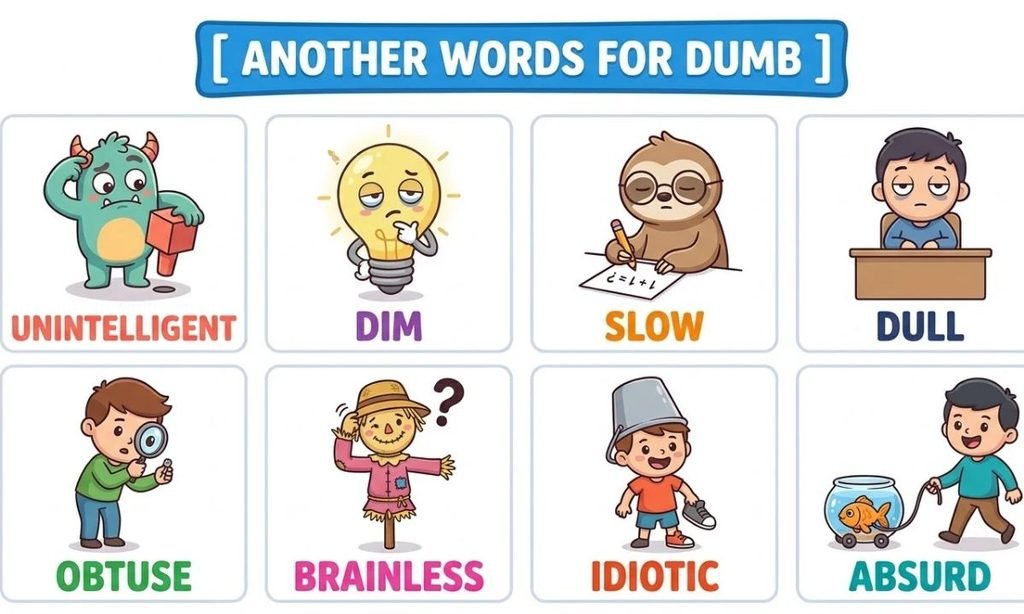
Thickheaded
Meaning: Stubbornly unreceptive
Thickheaded blends stupidity with obstinacy, so it suits characters who refuse correction. Picture an uncle who rejects every map and drives in circles. It delivers warm exasperation and a touch of folksy humor.
Usage Examples:
- The thickheaded captain ignored the storm warnings.
- I won’t argue with a thickheaded opponent.
Dim-Witted
Meaning: Lacking sharpness
Dim-witted is a mild, descriptive term for a dull intellect, often used with humor. Think of a henchman who forgets the plan mid-heist. It conveys character quickly without heavy cruelty.
Usage Examples:
- The dim-witted henchman locked the keys in the van.
- No one called him dim-witted to his face.
Simple-Minded
Meaning: Overly uncomplicated
Simple-minded describes narrow thinking, including views that ignore nuance. Imagine a pundit reducing a complex crisis to one slogan. It signals reductionism, which helps you critique ideas rather than people.
Usage Examples:
- The simple-minded solution ignored every side effect.
- He mocked their simple-minded view of the economy.
Words for Absurd or Illogical Ideas
Inane
Meaning: Pointlessly silly
Inane describes remarks or ideas empty of substance, not people lacking intelligence. Picture a meeting derailed by a comment that adds nothing. It dismisses content crisply and leaves the speaker out of it.
Usage Examples:
- The inane chatter filled the elevator.
- She ignored the inane comments under her post.
Vacuous
Meaning: Empty-headed
Vacuous suggests a hollow mind or hollow talk, with a cooler tone than inane. Think of a speech full of buzzwords and no point. It lets you critique style over substance with elegance.
Usage Examples:
- The vacuous slogan said nothing about the product.
- He gave a vacuous smile and changed the subject.
Do not miss this: Synonyms for Collaboration: 28 Better Ways to Say It
Asinine
Meaning: Stupidly foolish
Asinine is the strongest word in this group and carries scorn. Imagine a rule requiring approval to refill the printer paper. Use it sparingly for dramatic force.
Usage Examples:
- The asinine policy cost the company its best staff.
- It was an asinine bet from the start.
Nonsensical
Meaning: Lacking logic
Nonsensical flags an argument that does not hold together without attacking anyone’s intelligence. Picture a contract clause that contradicts the one before it. It signals objectivity, which gives your critique weight.
Usage Examples:
- The report’s conclusion was nonsensical given its data.
- A nonsensical rule confused the whole department.
Fatuous
Meaning: Smugly silly
Fatuous adds self-satisfaction to foolishness, which makes it sharper than silly. Think of a executive celebrating a failed launch as a triumph. It gives your prose a polished, ironic bite.
Usage Examples:
- His fatuous grin annoyed the whole audience.
- The fatuous remark revealed how little he had read.
Casual Slang and Everyday Idioms for Dumb
These informal words for dumb suit conversation, dialogue, and social posts. Skip them in formal documents.
Slow on the Uptake
Meaning: Slow understanding
This idiom is gentler than dense and describes delay rather than inability. Picture a friend who laughs at the joke thirty seconds late. It keeps the mood light and the teasing affectionate.
Usage Examples:
- Sorry, I’m slow on the uptake before my coffee.
- He was slow on the uptake, but he got there.
Not the Sharpest Tool in the Shed
Meaning: Somewhat unintelligent
This idiom is a humorous, indirect jab that sounds softer than it reads. Imagine describing a coworker who mislabels every folder. The playful imagery reduces tension while still making your point.
Usage Examples:
- He’s kind, but not the sharpest tool in the shed.
- Nobody called her not the sharpest tool in the shed twice.
Clueless
Meaning: Utterly unaware
Clueless describes a lack of awareness or knowledge rather than a lack of brainpower. Think of a tourist asking a local where the local is from. It is breezy and common, so it feels natural in speech.
Usage Examples:
- I was clueless about the dress code.
- A clueless intern replied to everyone on the thread.
Dopey
Meaning: Goofily dull
Dopey is affectionate and childlike, closer to silly than harsh. Picture a puppy tripping over its own ears. It signals warmth, so it works when teasing someone you like.
Usage Examples:
- He wore a dopey grin after the surprise.
- That was a dopey mistake, and I own it.
Daft
Meaning: Charmingly foolish
Daft is a light, British-flavored word for harmless silliness. Imagine a friend suggesting a picnic in a thunderstorm. It softens criticism with humor.
Usage Examples:
- What a daft idea to cross the river at night.
- Don’t be daft; just ask for directions.
Boneheaded
Meaning: Blunderingly foolish
Boneheaded names a specific, obvious blunder, usually one the speaker also regrets. Think of locking your keys in the car with the engine running. It carries self-deprecating humor that disarms criticism.
Usage Examples:
- That was a boneheaded move, and I take the blame.
- A boneheaded pass cost the team the game.
Synonyms for “Dumb” Meaning Speechless or Mute
Use these for the second meaning of the word. They describe silence, not intelligence.
Mute
Meaning: Without speech
Mute is the clinical, neutral term for not speaking, and it can be temporary or permanent. Picture a crowd silenced by a stunning verdict. It states the fact plainly and keeps judgment out.
Usage Examples:
- The audience stood mute as the curtain fell.
- She stayed mute through the entire hearing.
Speechless
Meaning: Overcome silent
Speechless describes silence caused by emotion, such as awe, joy, or shock. Think of a winner who cannot find words at the podium. It conveys the weight of a moment without a single extra word.
Usage Examples:
- The news left him speechless.
- We were speechless at the view from the summit.
Tongue-Tied
Meaning: Awkwardly silent
Tongue-tied describes nervous hesitation, often in front of someone important. Imagine a student meeting their hero. It adds human vulnerability to dialogue and narration.
Usage Examples:
- She grew tongue-tied when the director walked in.
- He was tongue-tied on the first date.
Wordless
Meaning: Silent, unspoken
Wordless covers communication that happens without speech, including gestures and glances. Picture two old friends sharing a look across a crowded room. It gives writing a quiet, cinematic tone.
Usage Examples:
- They shared a wordless nod before the meeting began.
- The film’s wordless opening built tension.
Voiceless
Meaning: Lacking voice
Voiceless extends beyond speech to describe people without a platform or influence. Think of communities excluded from public decisions. It carries moral weight and invites empathy.
Usage Examples:
- The policy left rural residents voiceless.
- Advocates work for the voiceless in the system.
Verbs That Replace “Dumb” and “Dumb Down”
Most blogs treat “dumb” as an adjective only. It also works as a verb in the phrase “dumb down.” These verbs say the same thing with more control.
Oversimplify
Meaning: Reduce excessively
Oversimplify names the specific harm of dumbing down: losing important nuance. Imagine a report that boils a complex study down to one headline. It frames the problem as accuracy rather than insult.
Usage Examples:
- Don’t oversimplify the data for the board.
- The summary oversimplifies a very nuanced policy.
Water Down
Meaning: Weaken content
Water down describes making something less potent, unlike simplify, which can improve clarity. Picture a bold proposal softened until nobody objects. It exposes the loss of strength in plain terms.
Usage Examples:
- Committees tend to water down strong proposals.
- We refuse to water down the safety standards.
Silence
Meaning: Make quiet
Silence is the direct verb for forcing quiet, and it can be literal or figurative. Think of a moderator ending a heated argument. It signals control and finality.
Usage Examples:
- The chair moved to silence the interruptions.
- A single question silenced the room.
Muffle
Meaning: Dampen sound
Muffle softens rather than stops, suggesting partial suppression. Imagine heavy curtains dulling the noise from the street. It adds a sensory detail that enriches descriptive writing.
Usage Examples:
- Thick walls muffled the sound of the storm.
- She muffled her laugh behind her hand.
Hush
Meaning: Gently quiet
Hush is soft and almost tender, used to calm rather than control. Picture a parent settling a restless child at bedtime. It conveys care, which makes it ideal for gentle scenes.
Usage Examples:
- The librarian hushed the noisy group.
- A sudden snowfall hushed the entire town.
Trivialize
Meaning: Make unimportant
Trivialize describes treating a serious matter as minor, which is a sharper charge than dumbing down. Think of a spokesperson brushing off a major safety complaint. It labels the behavior and keeps the critique on the message.
Usage Examples:
- Critics said the memo trivialized the workers’ concerns.
- Don’t trivialize a problem customers keep reporting.
Dilute
Meaning: Reduce strength
Dilute suggests that adding filler lowers the impact of an idea. Imagine a sharp message buried under qualifiers and caveats. It gives you a clean, neutral way to describe a message that has lost its edge.
Usage Examples:
- Too many caveats dilute the argument.
- The revisions diluted the original vision.
Antonyms: Strong Words for Smart and Quick-Witted
Antonyms for dumb help you praise as precisely as you critique. Use bright for quick learners, clever for inventive thinkers, astute for sharp observers, and quick-witted for fast, humorous minds. Choose perceptive, insightful, or knowledgeable when you want formal praise in a review or reference letter.
Frequently Asked Questions About Synonyms for Dumb
What is another word for dumb?
Common alternatives include unwise, unintelligent, foolish, and dense, depending on whether you mean poor judgment or slow understanding.
What is a polite or professional word for dumb?
Unwise, ill-advised, and suboptimal are polite, professional options because they critique a decision instead of attacking a person.
What is a fancy or smart word for dumb?
Obtuse, vacuous, and fatuous are sophisticated choices that add literary precision to formal or creative writing.
Why is the word dumb considered ableist?
The word historically labeled people who could not speak, including Deaf individuals, and wrongly equated speech disability with low intelligence.
What is the opposite of dumb?
The opposites include bright, clever, astute, and quick-witted, each capturing a different flavor of intelligence.
Conclusion
Choosing the right word does more than replace “dumb.” It sharpens your meaning, protects the person you are addressing, and signals that you think before you speak. A precise word turns an insult into insight, a vague jab into useful feedback, and a flat character into a living one. Start with the situation, match the tone, and let the specific word do the work.
1 thought on “Synonyms for Dumb: 48 Smarter Words by Context and Tone”