
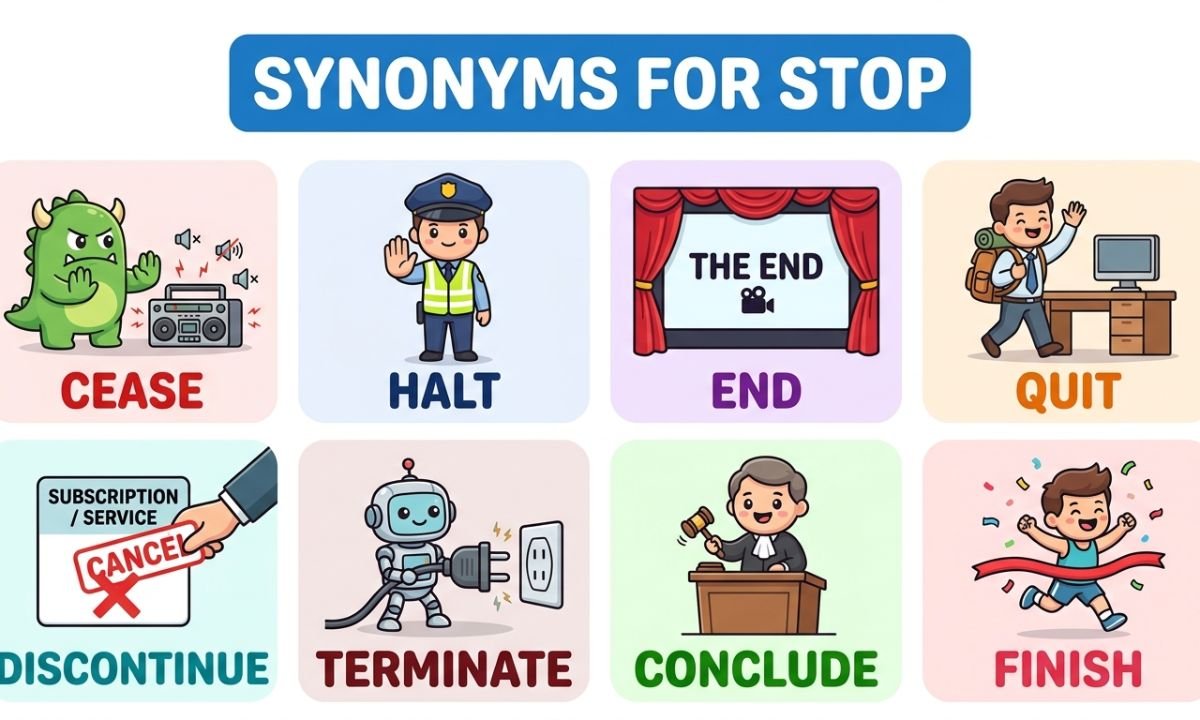
“Stop” is short, clear, and tone-deaf. It does the job, but it rarely does it well. You stop a car, a leak, a meeting, a habit, a rumor, and each one calls for a different word. This guide gives you 35 synonyms for stop, with the nuance, the tone, and two examples for each. Some are formal, some are casual, and a few are built for one situation only. Pick the one that fits, and your writing gets sharper right away.
What Does “Stop” Mean?
“Stop” means to end an action, halt movement, or keep something from happening. It works as a verb (stop the car), as a noun (a bus stop), and inside phrasal verbs like stop by and stop over. That range is why other words for stop fall into clear groups: words that end something for good, words that pause it, and words that prevent it from starting at all.
Why Word Choice Matters
“Stop” has no tone. Tell a client “we will stop the service” and it sounds abrupt. Say “we will discontinue the service” and it sounds planned. Tell a friend to “desist” and they will laugh at you. The right word shows who is in control, how final the action is, and how you feel about it.
How to Choose the Right Synonym for Stop
Start with three questions. Is the stop permanent or temporary? Is it ending on its own, or is someone forcing it? Is the setting formal or casual?
Permanent endings point to cease, terminate, and discontinue. Temporary stops point to pause, suspend, and halt. Prevention points to block, prevent, thwart, and forestall. For casual speech, try quit, knock off, or call it a day.
You can also test your sentence with the opposite word. If “resume” fits afterward, choose a temporary word such as pause or suspend. If “continue” or “start” is the natural opposite, choose a word like cease, end, or prevent.
Stop vs. Cease, Halt, Quit, and Pause
These five words get swapped all the time. They should not be.
- Stop: Neutral and works anywhere.
- Cease: Formal, often used for ongoing activity, rules, or operations.
- Halt: Sudden, often imposed, and often temporary.
- Quit: Casual, and usually a personal choice.
- Pause: Brief, with a clear plan to continue.
Halt
Core Definition & Nuance: Halt means to stop suddenly, usually because of a command, a barrier, or an outside force. A driver halts at a crossing when the barrier arms come down.
Emotional Value & Benefit: It signals that the stop was deliberate, not accidental. Readers feel that someone is in control. That gives instructions and reports a firm, steady edge.
Usage Examples:
- The foreman halted construction when the inspector found a cracked beam.
- Please halt at the red line until your name is called.
Cease
Core Definition & Nuance: Cease means to come to an end, and it is most at home in formal or legal writing about ongoing activity. A landlord’s letter might say that noisy work must cease after 8 p.m.
Emotional Value & Benefit: It sounds calm and official, never angry. The reader hears a rule instead of a rebuke. That keeps a tough message firm without making it personal.
Usage Examples:
- The company will cease production of the older model in March.
- All talking must cease once the exam begins.
Quit
Core Definition & Nuance: Quit means to stop doing something by choice, and it sounds casual and personal. A friend tells you they quit coffee after weeks of bad sleep.
Emotional Value & Benefit: It puts the decision in the person’s own hands. That reads as strength, not loss. In plain conversation, it feels honest and human.
Usage Examples:
- She quit smoking last spring and has not looked back.
- I quit checking email after dinner, and my evenings got quieter.
Pause
Core Definition & Nuance: Pause means to stop briefly with the plan to continue. You pause a video to answer the door, then press play again.
Emotional Value & Benefit: It tells the reader that nothing is over. That lowers worry and keeps trust intact. It buys you time without closing any doors.
Usage Examples:
- Let’s pause the rollout until we hear back from legal.
- He paused before answering, then asked for a minute to think.
End
Core Definition & Nuance: End means to bring something to its natural or chosen close, and it is plain and direct. A manager ends a meeting as soon as the agenda is done.
Emotional Value & Benefit: It carries finality without drama. Readers know the matter is closed. That clarity helps when you want to avoid follow-up questions.
Usage Examples:
- The council voted to end the parking trial on Friday.
- We end every session with a five-minute recap.
Discontinue
Core Definition & Nuance: Discontinue means to stop offering, making, or providing something that had been ongoing, and it fits business language well. A brand discontinues a shoe color once sales fade.
Emotional Value & Benefit: It frames the stop as a planned decision, not a failure. Customers read it as orderly. A clear notice gives people time to adjust.
Usage Examples:
- We will discontinue the basic plan on January 1 and move current users to the new tier.
- The pharmacy discontinued home delivery in outlying areas.
Terminate
Core Definition & Nuance: Terminate means to end something formally, most often a contract, a job, or a process. A tenant receives notice that the lease will terminate at the end of the month.
Emotional Value & Benefit: It sounds exact and procedural. That removes guesswork and keeps feelings out of it. Use it when the paper trail matters.
Usage Examples:
- Either party may terminate this agreement with 30 days’ written notice.
- The script terminates when it reaches the last file in the folder.
Desist
Core Definition & Nuance: Desist means to stop doing something, usually after being told to, and it sounds legal or stern. A neighbor receives a letter telling them to desist from dumping waste in the shared lot.
Emotional Value & Benefit: It carries authority. The reader understands there may be a consequence. Use it rarely, because it can feel cold.
Usage Examples:
- The notice ordered the contractor to desist from further work on the site.
- Please desist from using the staff entrance for deliveries.
Suspend
Core Definition & Nuance: Suspend means to stop something for a set time or until a condition is met. A school suspends bus service during a snowstorm.
Emotional Value & Benefit: It tells the reader that the stop has limits. That sets expectations and eases anxiety. It also leaves you room to restart.
Usage Examples:
- The airline suspended flights until the runway was cleared.
- We have suspended your account while we review the charge.
Prevent
Core Definition & Nuance: Prevent means to stop something before it happens. A homeowner wraps pipes in winter to prevent them from freezing.
Emotional Value & Benefit: It points the reader toward what is still possible. That feels proactive and calm. It turns a problem into a plan.
Usage Examples:
- Regular maintenance helps prevent breakdowns.
- The new filter prevents spam from reaching your inbox.
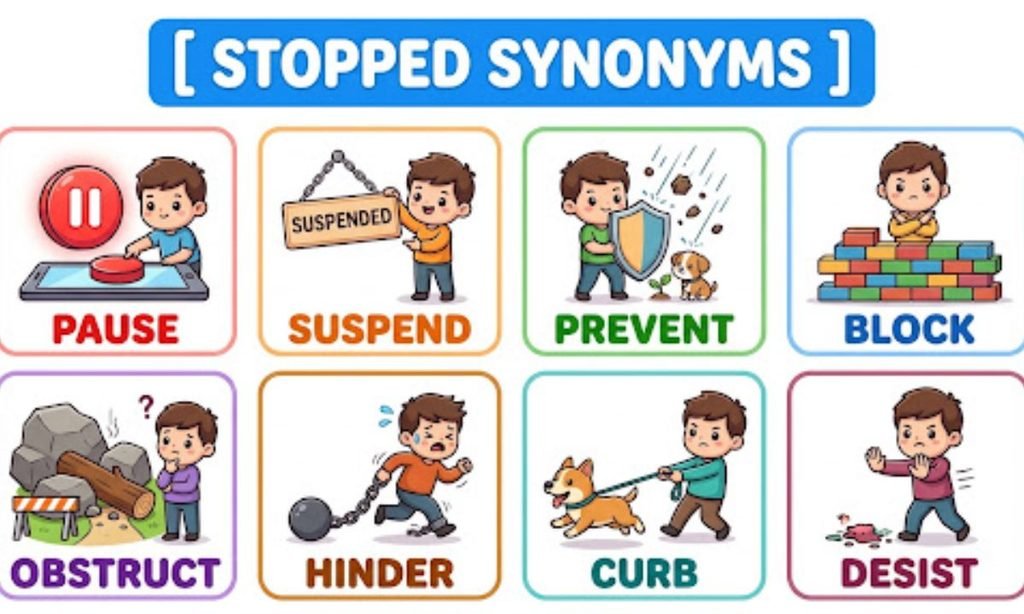
Block
Core Definition & Nuance: Block means to stop something by placing an obstacle in its way. A parked van blocks the neighbor’s driveway.
Emotional Value & Benefit: It gives the reader a physical picture. The cause feels concrete. That makes an explanation quick to grasp.
Usage Examples:
- A fallen tree blocked the road for three hours.
- The firewall blocks traffic from unknown sources.
Prohibit
Core Definition & Nuance: Prohibit means to forbid by rule or law, so the stop comes from authority. A building prohibits smoking in shared hallways.
Emotional Value & Benefit: It makes the boundary clear. The reader knows exactly where the line sits. Clear lines cut down on arguments.
Usage Examples:
- City rules prohibit parking on this side of the street.
- The contract prohibits sharing client data with outside vendors.
Thwart
Core Definition & Nuance: Thwart means to stop someone’s plan by getting in the way, and it implies a determined opponent. A goalkeeper thwarts a last-minute shot.
Emotional Value & Benefit: It adds a little tension. Readers feel there was a real contest. Use it in stories and news where the stakes are real.
Usage Examples:
- Quick action by staff thwarted the scam.
- Bad weather thwarted our plan for an outdoor launch.
Curb
Core Definition & Nuance: Curb means to hold something in check so it slows or stays within limits, instead of stopping it outright. A family curbs its spending in the months before a big move.
Emotional Value & Benefit: It sounds measured and realistic. The reader sees control, not a crackdown. That makes it a good fit when a full stop is not possible.
Usage Examples:
- The city introduced fees to curb traffic downtown.
- He tried to curb his habit of checking his phone at dinner.
Hinder
Core Definition & Nuance: Hinder means to slow progress or get in its way without fully stopping it. A slow laptop hinders a designer’s work all day.
Emotional Value & Benefit: It names a drag on progress without pointing a finger. The reader sees a problem that can be fixed. That invites solutions.
Usage Examples:
- Missing data hindered the team’s early analysis.
- Do not let small errors hinder your launch.
Impede
Core Definition & Nuance: Impede means to slow or obstruct movement or progress, and it is a touch more formal than hinder. Construction barriers impede foot traffic along a busy street.
Emotional Value & Benefit: It sounds measured and professional. Readers hear a cause, not a complaint. That keeps reports neutral.
Usage Examples:
- Heavy equipment impeded access to the loading dock.
- Unclear approvals impede progress on every project.
Restrain
Core Definition & Nuance: Restrain means to hold back a person, animal, or impulse by force or self-control. A hiker keeps a dog on a short leash to restrain it near a cliff edge.
Emotional Value & Benefit: It signals control over something that could cause harm. The reader feels safer. It also works well for emotions, where the control is internal.
Usage Examples:
- Officers restrained the crowd behind the barrier.
- She restrained her anger and asked a calm question.
Obstruct
Core Definition & Nuance: Obstruct means to block a path or interfere with progress, and it often suggests intent. A delivery van parked in a fire lane obstructs emergency access.
Emotional Value & Benefit: It implies a blockage that should be cleared. The reader senses fault. Use it when the point is accountability.
Usage Examples:
- Boxes obstructed the emergency exit.
- The inquiry found no evidence that he obstructed the investigation.
Must Read: Synonyms for Compassionate: 30 Better Words and When to Use Them
Conclude
Core Definition & Nuance: Conclude means to bring something to a planned finish, and it suits talks, meetings, and formal events. A speaker concludes a presentation with one clear request.
Emotional Value & Benefit: It sounds composed and complete. Readers feel the work reached its goal. That leaves a sense of closure.
Usage Examples:
- The committee concluded its review on Tuesday.
- We will conclude the call with questions from the audience.
Finish
Core Definition & Nuance: Finish means to stop because the task is done, not because something interrupted it. You finish a book on the train and look up to find your stop.
Emotional Value & Benefit: It suggests success, not interruption. The reader hears progress. The tone stays plain and warm.
Usage Examples:
- I will finish the report before lunch.
- The crew finished painting the hallway a day early.
Put a Stop To
Core Definition & Nuance: Put a stop to means to end something firmly, usually something unwanted. A teacher puts a stop to side chatter with one calm look.
Emotional Value & Benefit: It shows the speaker taking charge. Readers feel the problem is being handled. It carries confidence without harsh language.
Usage Examples:
- The new policy puts a stop to late invoices.
- We need to put a stop to these constant interruptions.
Bring to an End
Core Definition & Nuance: Bring to an end means to close something deliberately, often after a long run. A town brings a years-long dispute to an end by signing a shared agreement.
Emotional Value & Benefit: It carries weight and a sense of arrival. Readers feel relief. It works well in stories about change.
Usage Examples:
- The settlement brought the lawsuit to an end.
- Their talks brought years of conflict to an end.
Call a Halt
Core Definition & Nuance: Call a halt means to formally decide that something should stop, usually from a position of authority. A referee calls a halt to a match when lightning appears.
Emotional Value & Benefit: It places the decision with someone in charge. Readers feel the call was careful. It sounds firm but fair.
Usage Examples:
- The board called a halt to the merger talks.
- The coach called a halt to practice when the rain got heavy.
Come to a Standstill
Core Definition & Nuance: Come to a standstill means to stop moving or progressing entirely, as if nothing can go forward. Traffic on a highway comes to a standstill after a crash.
Emotional Value & Benefit: It paints the stuck state vividly. The reader feels the pressure of the moment. It explains a problem without blaming a person.
Usage Examples:
- Talks came to a standstill over the budget.
- The factory came to a standstill when the power failed.
Call It a Day
Core Definition & Nuance: Call it a day means to stop work for now, casually and with a sense of having done enough. A team calls it a day after a long, productive Friday.
Emotional Value & Benefit: It sounds relaxed and human. Readers feel permission to rest. That warms a message in the right setting.
Usage Examples:
- Let’s call it a day and pick this up on Monday.
- After six hours of editing, she called it a day.
Cut Short
Core Definition & Nuance: Cut short means to end something sooner than planned. A storm cuts a beach day short.
Emotional Value & Benefit: It hints at an outside cause. Readers sense that something was lost. That builds sympathy without extra words.
Usage Examples:
- A family emergency cut his trip short.
- The fire alarm cut the presentation short.
Shut Down
Core Definition & Nuance: Shut down means to stop a business, system, or machine completely. A café shuts down after a rent increase makes the numbers impossible.
Emotional Value & Benefit: It is blunt and leaves little room for doubt. Readers understand the scale at once. Use it where clarity matters more than polish.
Usage Examples:
- The plant shut down for two weeks of repairs.
- Regulators shut down the site after repeated violations.
Knock Off
Core Definition & Nuance: Knock off means to stop working, usually at the end of a shift, and it belongs in casual speech. Coworkers knock off at five and head for the train.
Emotional Value & Benefit: It sounds friendly and easygoing. It creates a sense of team. Keep it out of formal reports.
Usage Examples:
- We usually knock off around five on Fridays.
- Knock off the jokes and let her finish.
Cut Out
Core Definition & Nuance: Cut out means to stop doing or using something, usually for a practical reason. A runner cuts out late-night snacks before race week.
Emotional Value & Benefit: It reads as a sensible choice. Readers see effort, not punishment. It suits habits, diets, and routines.
Usage Examples:
- I cut out sugary drinks and felt better within a week.
- Cut out the extra steps, and the process gets faster.
Forestall
Core Definition & Nuance: Forestall means to stop something by acting before it can happen. A manager forestalls complaints by sharing the schedule early.
Emotional Value & Benefit: It signals foresight. Readers feel they are in capable hands. The tone stays calm and in control.
Usage Examples:
- She sent the draft early to forestall any confusion.
- The bank added alerts to forestall fraud.
Stymie
Core Definition & Nuance: Stymie means to block someone’s progress so they are left stuck. A missing password stymies a new hire on the first morning.
Emotional Value & Benefit: It names the frustration without exaggerating it. The reader feels understood. It adds a little color to a plain report.
Usage Examples:
- A lack of funding stymied the project.
- The error message stymied me for an hour.
Abandon
Core Definition & Nuance: Abandon means to stop something by giving up on it, usually leaving it unfinished. A hiker abandons a trail when fog rolls in.
Emotional Value & Benefit: It carries finality and a hint of loss. Readers sense the stakes. Use it when giving up is the story, and handle the tone with care.
Usage Examples:
- The team abandoned the redesign after testing failed.
- We abandoned the search when night fell.
Arrest
Core Definition & Nuance: Arrest, outside of law enforcement, means to stop a process or a decline, and it sounds formal and technical. A new pricing plan arrests the drop in sign-ups.
Emotional Value & Benefit: It suggests firm, effective control. Readers see a decline halted. The formal weight lends credibility to a report.
Usage Examples:
- Better pricing arrested the drop in sales.
- The retaining wall arrested the slide of loose rock.
Interrupt
Core Definition & Nuance: Interrupt means to stop something briefly by breaking in. A phone call interrupts a quiet dinner.
Emotional Value & Benefit: It names both the cause of the stop and who did it. Readers get context right away. The tone stays neutral to mildly negative.
Usage Examples:
- Please do not interrupt the speaker.
- A power cut interrupted the stream for ten minutes.
Wrap Up
Core Definition & Nuance: Wrap up means to bring something to a close in a friendly, informal way. A team wraps up a project with a quick thank-you note.
Emotional Value & Benefit: It sounds tidy and finished. Readers feel an orderly end. It lowers tension in a meeting or a message.
Usage Examples:
- Let’s wrap up by confirming next steps.
- We wrapped up the survey on Friday.
Frequently Asked Questions
What is a stronger word for stop?
Halt, terminate, and cease are stronger than stop because they suggest force, finality, or formal authority.
What is a formal synonym for stop?
Cease, discontinue, and terminate are the most common formal choices, depending on whether you mean ending an activity, a service, or an agreement.
What is the difference between stop and cease?
Stop is neutral and works in any setting, while cease is formal and usually refers to ongoing activity, rules, or operations.
What is the difference between stop and halt?
Halt usually describes a sudden or commanded stop that is often temporary, while stop is a general term with no extra implication.
What can I say instead of “stop doing something”?
Try quit, give up, or cut out in casual writing, and cease or discontinue in formal writing.
Conclusion
The word you pick for “stop” tells your reader more than the action itself. It shows whether the end is temporary or final, planned or forced, firm or friendly. Choose pause and people relax, choose terminate and they pay attention, choose call it a day and they smile. Match the word to the situation, the tone, and the person reading, and a plain message becomes a clear one that lands the way you meant it.
1 thought on “Synonyms for Stop: 35 Better Words for Every Situation”