
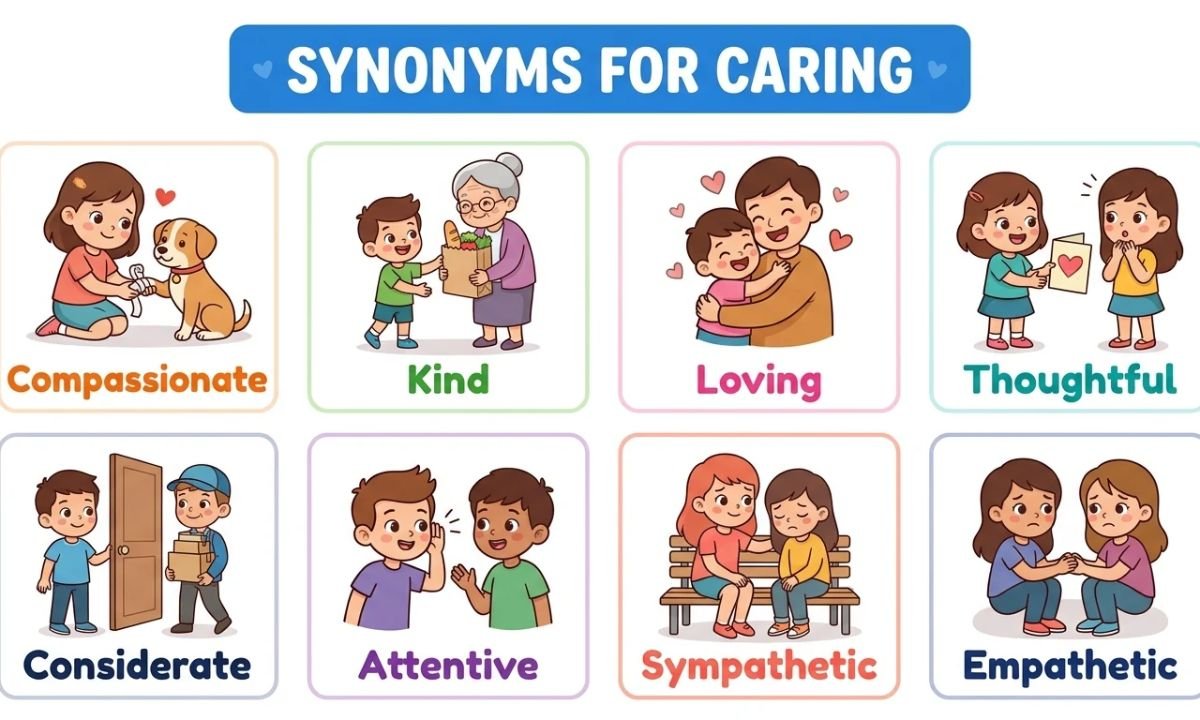
Caring is a good word. It is also a tired one. It shows up in resumes, cards, reviews, and eulogies until it stops meaning much. The right synonym for caring does more work, because it tells the reader what kind of care you mean. This guide gives you 32 words for caring, each with a clear meaning and two examples. You will also find antonyms, grammar notes, and a side-by-side look at close pairs. Pick the word that fits the moment, and your writing gets sharper.
What Does “Caring” Mean?
Caring means feeling or showing concern for other people. It sits where kindness, compassion, affection, and attention overlap. That breadth is why the word is useful, and it is also why the word is vague.
Say “she is caring” and the reader fills in the blanks. Does she cook for sick neighbors? Does she listen well? Does she worry a lot? A more precise word answers that question for them.
Caring as an Adjective and as a Verb Phrase
Most people use “caring” in two different ways, and each calls for a different kind of replacement.
As an adjective, it describes character: a caring person, a caring teacher, a caring tone. Another word for a caring person is usually a trait word, such as compassionate, considerate, or warmhearted.
As part of a verb phrase, it describes action: caring for someone, caring for a parent, caring for a garden. Another word for caring for someone is usually an action phrase, such as looking after, taking care of, or tending to.
Mixing the two causes clumsy sentences. “He is looking after” needs an object. “He is a looking after person” does not work. Match the word to the job before you swap it in.
When “Caring” Falls Short
Caring works in casual speech. It struggles in a few places.
On a resume, it says nothing measurable. In formal or academic writing, it can sound sentimental. In healthcare or customer service, it can feel like a label instead of evidence.
Some replacements carry baggage too. Words like doting, watchful, vigilant, and mothering can imply surveillance, excess attachment, or treating an adult like a child. Use them on purpose, not as automatic swaps.
A formal synonym for caring is usually compassionate, attentive, or considerate. If you want a stronger word than caring, reach for devoted or selfless. If you want a deeper word for caring, those two are also the best place to start.
How to Choose a Better Word for Caring
Start with the setting, then pick the word.
- Resume or interview: attentive, dedicated, responsible, supportive
- Healthcare: compassionate, empathetic, attentive, gentle
- Customer service: considerate, understanding, attentive
- Relationships: loving, affectionate, tender, devoted
- Parenting: nurturing, protective, patient, encouraging
- Academic or formal writing: benevolent, humane, altruistic
The 32 words below are grouped loosely from warm to practical. Each one shows its meaning, its feel, and two sentences you can borrow.
Compassionate
Core Definition & Nuance: Compassionate means moved to help someone who is suffering, which makes it stronger than caring because it carries a pull to act. A nurse who sits with a frightened patient after a hard diagnosis is compassionate.
Emotional Value & Benefit: This word tells the reader you notice pain and respond to it. It builds trust quickly. People feel safe around someone described this way.
Usage Examples:
- The compassionate counselor gave him time to explain without interrupting.
- Her compassionate reply eased the tension in the room.
Kind
Core Definition & Nuance: Kind means gentle and generous in how you treat others, without the emotional weight that compassion carries. A stranger who holds the door and asks if you need a hand is kind.
Emotional Value & Benefit: Kind is simple, and that is its strength. It sets a warm, low-pressure tone. Readers relax because nothing about it feels forced.
Usage Examples:
- The kind receptionist found us a quiet seat away from the noise.
- He wrote a kind note to every new hire on their first day.
Thoughtful
Core Definition & Nuance: Thoughtful means showing that you considered someone’s needs ahead of time, which makes it about planning more than feeling. A coworker who leaves soup on a sick teammate’s desk is thoughtful.
Emotional Value & Benefit: It credits the effort behind the gesture. The reader feels seen, not just liked. It also makes praise specific and believable.
Usage Examples:
- It was a thoughtful gift, chosen with her favorite tea in mind.
- The team sent a thoughtful follow-up after the meeting ran long.
Considerate
Core Definition & Nuance: Considerate means respectful of other people’s comfort, time, and space, so it leans toward good manners more than warmth. A neighbor who keeps the music low during your baby’s nap is considerate.
Emotional Value & Benefit: It signals respect without getting personal. That makes it safe for workplace and formal settings. The tone stays warm and the boundaries stay clear.
Usage Examples:
- A considerate host asks about allergies before planning the menu.
- She was considerate enough to send the agenda a day early.
Attentive
Core Definition & Nuance: Attentive means paying close notice to what someone needs right now, which makes it practical where caring is emotional. A waiter who refills your water before you ask is attentive.
Emotional Value & Benefit: It shows that care lives in the details. Readers gain confidence because the word points to behavior they can picture. It works well in service and healthcare writing.
Usage Examples:
- The attentive nurse noticed the change in his breathing right away.
- Our support team stays attentive to every customer, even on busy days.
Sympathetic
Core Definition & Nuance: Sympathetic means feeling sorrow for someone’s hardship from a small distance, unlike empathetic, which means sharing the feeling. A friend who sends flowers and says “I’m so sorry for your loss” is sympathetic.
Emotional Value & Benefit: It acknowledges pain without claiming to feel it. That restraint can come across as respectful. It avoids the risk of sounding presumptuous.
Usage Examples:
- The judge was sympathetic to the family’s situation but held to the law.
- He gave a sympathetic nod and let her finish her story.
Empathetic
Core Definition & Nuance: Empathetic means understanding and sharing another person’s feelings from their point of view, which goes a step beyond sympathy. A manager who remembers her own awkward first week and adjusts the onboarding plan is empathetic.
Emotional Value & Benefit: This word tells people they will be understood, not just pitied. It lowers defenses and invites honesty. It is a strong pick for leadership and healthcare.
Usage Examples:
- An empathetic listener repeats back what they heard before offering advice.
- Her empathetic approach helped the nervous student speak up.
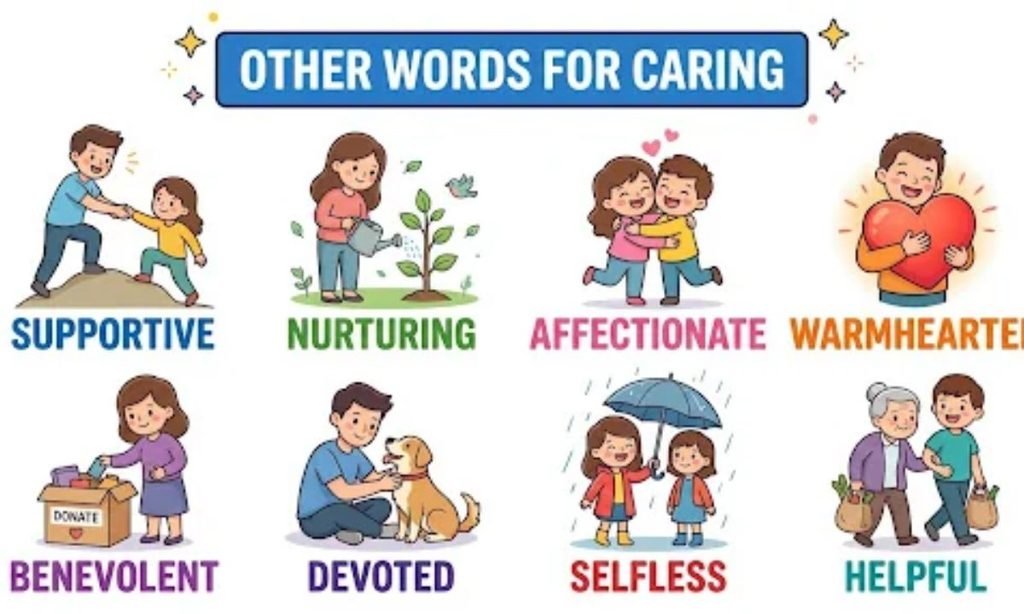
Nurturing
Core Definition & Nuance: Nurturing means supporting someone’s growth and wellbeing over time, so it points to a long arc and not a single moment. A mentor who guides a new hire through her first year is nurturing.
Emotional Value & Benefit: It frames care as an investment. The reader pictures progress, not just comfort. It fits parenting, teaching, and team leadership.
Usage Examples:
- The nurturing environment helped the young players take risks.
- She is a nurturing teacher who celebrates small wins.
Devoted
Core Definition & Nuance: Devoted means committed to a person with steady loyalty, which makes it a deeper word for caring than most. A son who drives his mother to every appointment for years is devoted.
Emotional Value & Benefit: It signals permanence. Readers feel reassured that the care will not fade. Use it when the effort has lasted long enough to earn the word.
Usage Examples:
- He was a devoted caregiver to his father through the final illness.
- The devoted staff stayed late every night during the storm.
Benevolent
Core Definition & Nuance: Benevolent means wishing and doing good for others, often from a position of means or authority, which gives it a formal edge. A donor who quietly funds scholarships each year is benevolent.
Emotional Value & Benefit: It lifts the tone of formal writing. It suggests goodwill with purpose behind it. Because it can sound distant, it works better for institutions than for close relationships.
Usage Examples:
- The foundation takes a benevolent view of small community projects.
- A benevolent mentor, she opened doors for dozens of young engineers.
Affectionate
Core Definition & Nuance: Affectionate means openly showing fondness through words or touch, so it describes visible warmth, not just inner concern. A grandfather who hugs every grandchild at the door is affectionate.
Emotional Value & Benefit: It puts warmth on display. Readers sense closeness at once. It suits personal writing and is risky in professional settings.
Usage Examples:
- Their affectionate greeting made the visit feel like a homecoming.
- The dog is affectionate with everyone, even the mail carrier.
Warmhearted
Core Definition & Nuance: Warmhearted means friendly and generous by nature, a softer and more everyday word than compassionate. A shop owner who remembers regulars by name and slips in an extra pastry is warmhearted.
Emotional Value & Benefit: It makes people feel welcome. The word is easy to read and carries no pressure. It paints a person as approachable.
Usage Examples:
- The warmhearted innkeeper treated every guest like family.
- She has a warmhearted laugh that puts new people at ease.
Selfless
Core Definition & Nuance: Selfless means putting other people’s needs first with little thought of reward, which makes it a stronger word than caring. A volunteer who gives up her weekends to deliver meals is selfless.
Emotional Value & Benefit: It signals real sacrifice. Praise lands harder because the reader sees cost behind the care. Use it sparingly so it keeps its weight.
Usage Examples:
- His selfless decision to cover the night shift saved the team.
- She remained selfless even when the hours grew long.
Supportive
Core Definition & Nuance: Supportive means helping someone through steady backing, so the care shows up as reliability. A partner who handles the evening routine while you study for exams is supportive.
Emotional Value & Benefit: It tells the reader they will not face a problem alone. That feeling is a core part of psychological safety. It works on resumes, in reviews, and in relationships.
Usage Examples:
- A supportive manager makes room for questions during a hard project.
- Her supportive friends showed up the day of the move.
Loving
Core Definition & Nuance: Loving means showing deep affection for someone close, which sets it apart from caring in both depth and intimacy. A parent who stays up all night with a sick child is loving.
Emotional Value & Benefit: It signals the strongest kind of bond. Readers feel emotional safety right away. Keep it for family and close relationships, since it can feel too personal at work.
Usage Examples:
- They grew up in a loving home with a lot of laughter.
- His loving letters kept the family close during the long deployment.
Tender
Core Definition & Nuance: Tender means gentle and soft in how you treat someone who is vulnerable, so it adds a physical, careful quality. A nurse who adjusts a pillow behind an elderly patient is tender.
Emotional Value & Benefit: It slows the reader down. The word brings gentleness to mind and signals that the person is safe. It reads best in personal and healthcare writing.
Usage Examples:
- She gave the newborn a tender kiss on the forehead.
- His tender care helped the injured bird recover.
Kindhearted
Core Definition & Nuance: Kindhearted means kind by nature, not just through an occasional gesture. A teacher who always notices the quiet student in the back row is kindhearted.
Emotional Value & Benefit: It describes character, not a single act. Readers assume the kindness is reliable. That makes it a good fit for references and personal tributes.
Usage Examples:
- The kindhearted driver waited while the older passenger found her seat.
- He is a kindhearted boss who never raises his voice.
Also Read: Actions Synonym: Better Words and When to Use Them
Understanding
Core Definition & Nuance: Understanding means patient and willing to see a situation from the other person’s side without judging, which adds fairness to warmth. A manager who moves a deadline when your childcare falls through is understanding.
Emotional Value & Benefit: It tells people they will not be punished for being human. That lowers stress and invites honesty. It works well in customer service and leadership.
Usage Examples:
- The landlord was understanding about the late payment and offered a short extension.
- An understanding teammate made the hard conversation much easier.
Gentle
Core Definition & Nuance: Gentle means mild and careful in manner, so it describes how care is delivered more than how much of it there is. A vet who speaks softly to a nervous dog is gentle.
Emotional Value & Benefit: It calms the reader. The word promises no harshness or surprise. That sense of safety matters most in healthcare, parenting, and teaching.
Usage Examples:
- Her gentle questions helped the child open up about the day.
- The therapist has a gentle way of guiding hard conversations.
Generous
Core Definition & Nuance: Generous means freely giving time, attention, or resources, so it stresses the giving more than the feeling. A colleague who shares credit for a project in front of leadership is generous.
Emotional Value & Benefit: It points to visible action. Readers can see what the care cost and what it gave. It also makes praise feel earned, not automatic.
Usage Examples:
- She was generous with her time and mentored three interns that year.
- A generous listener gives you space to finish your thought.
Altruistic
Core Definition & Nuance: Altruistic means acting for the benefit of others with no personal gain, which makes it a more formal and academic cousin of selfless. A researcher who donates her prize money to fund a free clinic is altruistic.
Emotional Value & Benefit: It signals principle, not impulse. The tone is serious and respectful. It suits essays, reports, and nonprofit writing.
Usage Examples:
- The study looked at altruistic behavior among strangers during a crisis.
- His altruistic work with the food bank spanned two decades.
Humane
Core Definition & Nuance: Humane means showing compassion in how people or animals are treated, so it often describes policies and systems more than individuals. A shelter that adopts a no-kill policy is humane.
Emotional Value & Benefit: It frames care as a standard, not a mood. Readers see an institution with values. It is a strong choice for formal and policy writing.
Usage Examples:
- The hospital adopted a more humane visiting policy for families.
- They demanded humane conditions for every worker on the site.
Protective
Core Definition & Nuance: Protective means guarding someone from harm, but it is a contextual match, not a direct synonym, because it can tip into controlling. A big sister who walks her brother to school is protective.
Emotional Value & Benefit: It shows that care includes safety. Used carefully, it reassures the reader. Used loosely, it can suggest the person is being treated as helpless.
Usage Examples:
- He is protective of his team and speaks up when others criticize them unfairly.
- A protective parent still lets a teenager make small mistakes.
Dedicated
Core Definition & Nuance: Dedicated means committed to a person or duty with steady effort, which puts the focus on follow-through. A hospice nurse who never misses a visit is dedicated.
Emotional Value & Benefit: It signals reliability. Readers feel they can count on the person. It is one of the strongest professional alternatives for a caring person.
Usage Examples:
- The dedicated caregiver learned every detail of his medication schedule.
- Our dedicated support staff answers each message within the hour.
Responsible
Core Definition & Nuance: Responsible means reliably taking charge of someone’s wellbeing, but it is a contextual match, not a true synonym, because it describes duty more than warmth. A babysitter who follows the allergy list to the letter is responsible.
Emotional Value & Benefit: It reassures readers that the job will be done right. That builds trust in formal settings. Pair it with a warmer word when emotion matters.
Usage Examples:
- She is a responsible caregiver who keeps clear notes for every shift.
- The school hired a responsible adult to supervise the field trip.
Als0 Read: Synonyms for Collaboration: 28 Better Ways to Say It
Comforting
Core Definition & Nuance: Comforting means easing someone’s distress, so it describes the effect of care more than the intent behind it. A friend who sits beside you in silence after bad news is comforting.
Emotional Value & Benefit: It names the relief the reader feels. The word signals safety and calm. It works well in condolence notes and personal writing.
Usage Examples:
- His comforting voice steadied her before the surgery.
- The comforting routine of Sunday dinner kept the family close.
Encouraging
Core Definition & Nuance: Encouraging means giving someone the confidence to keep going, which makes it forward-looking where caring is general. A coach who points to a runner’s progress after a bad race is encouraging.
Emotional Value & Benefit: It tells the reader they are capable. That builds motivation and self-belief. It is useful in teaching, coaching, and management.
Usage Examples:
- The encouraging teacher wrote a personal note on each draft.
- Her encouraging words got him through the final week of training.
Mindful
Core Definition & Nuance: Mindful means aware and deliberate about how your actions affect others, which makes it a quieter, more careful word than caring. A host who checks dietary needs before the party is mindful.
Emotional Value & Benefit: It shows that care is intentional. Readers see someone who thinks before acting. It fits professional, calm, and measured writing.
Usage Examples:
- Be mindful of your tone when giving feedback to a new teammate.
- The mindful nurse lowered the lights before speaking to the family.
Concerned
Core Definition & Nuance: Concerned means worried and attentive about someone’s wellbeing, so it carries more anxiety than warmth. A parent who notices a teen has stopped eating lunch at school is concerned.
Emotional Value & Benefit: It signals that you noticed a problem. That invites the reader to open up. Because it can imply worry, pair it with a calm tone.
Usage Examples:
- A concerned neighbor knocked to make sure everyone was safe after the storm.
- We are concerned about how the new schedule affects your health.
Looking After
Core Definition & Nuance: Looking after is a verb phrase meaning to keep watch over someone and meet their daily needs, which makes it another word for caring for someone. A neighbor looking after your dog during a work trip fits the phrase.
Emotional Value & Benefit: It sounds warm and plain. The reader pictures real, ongoing help. It avoids the stiffness of formal phrasing.
Usage Examples:
- She spent the weekend looking after her sister’s twins.
- He has been looking after his grandmother since last spring.
Taking Care Of
Core Definition & Nuance: Taking care of is a verb phrase meaning to handle someone’s needs, and it is broader and more casual than looking after. A daughter who manages her father’s meals, bills, and appointments is taking care of him.
Emotional Value & Benefit: It signals that the job is being handled. Readers feel relief because someone is in charge. It is clear, direct, and easy to read.
Usage Examples:
- After the surgery, his brother took care of everything at home.
- We take care of every client with the same attention to detail.
Tending To
Core Definition & Nuance: Tending to is a verb phrase meaning to give careful, regular attention to a person or need, and it has a slightly formal, hands-on feel. A nurse tending to a patient’s wound is a clear example.
Emotional Value & Benefit: It suggests steady, skilled attention. The reader sees care in motion. It works well in healthcare and professional writing.
Usage Examples:
- The staff are tending to guests who arrived late in the evening.
- She spent the morning tending to her ailing mother.
Antonyms and Opposites of Caring
Knowing the opposite of caring helps you pick the right word on both sides. Not every negative word is a true antonym, so this section separates direct opposites, context-specific opposites, and look-alikes.
Direct Antonyms of Caring
Use these when caring means showing concern, kindness, or compassion:
- Indifferent: showing no interest or concern
- Uncaring: lacking concern for others
- Unfeeling: not showing emotion or sympathy
- Cold: emotionally distant or unsympathetic
- Callous: insensitive to others’ suffering
- Heartless: lacking compassion or mercy
- Detached: emotionally removed from a situation
- Aloof: distant, unfriendly, or uninvolved
- Selfish: focused on one’s own needs over others’
- Neglectful: failing to give proper care or attention
Opposite Words by Context
| Meaning of “caring” | Best opposite | Example |
| Compassionate | Callous, heartless | A callous response ignored the patient’s distress. |
| Kind and thoughtful | Inconsiderate, thoughtless | His thoughtless comment hurt her feelings. |
| Loving and affectionate | Cold, distant, unaffectionate | Their relationship felt distant and unaffectionate. |
| Supportive | Unsupportive, dismissive | An unsupportive manager dismissed the team’s concerns. |
| Protective or responsible | Neglectful, irresponsible | Neglectful supervision put the children at risk. |
| Attentive | Inattentive, heedless | The inattentive caregiver missed important changes. |
Words Often Mistaken for Antonyms
Do not present these as universal opposites of caring:
- Careless: means lacking attention or caution, not necessarily lacking compassion.
- Cruel: implies intentional harm, so it is stronger and more specific than uncaring.
- Self-centered: describes self-focus, but a self-centered person may still perform caring actions.
- Distant: can describe emotional distance, but not always a lack of care.
- Demanding: may coexist with caring behavior, especially in parenting or management.
Antonyms of Caring in Sentences
- Her caring nature was the opposite of his indifferent attitude.
- A caring teacher listens; an inattentive one overlooks students’ needs.
- The nurse’s compassionate care contrasted with the facility’s neglectful practices.
- Rather than being cold and detached, he remained supportive during the crisis.
- A caring response acknowledges someone’s feelings; a dismissive response minimizes them.
Caring vs. Compassionate, Kind, and Thoughtful
These words overlap, but each one points to something different. Use this quick guide when you are deciding between them.
Caring vs. compassionate: Caring is general concern. Compassionate adds a drive to ease someone’s suffering.
Caring vs. kind: Caring is about concern. Kind is about how you treat people, and it needs no deeper feeling behind it.
Caring vs. thoughtful: Caring is a feeling. Thoughtful is evidence that you planned for someone’s needs.
Caring vs. considerate: Considerate focuses on respect for comfort and boundaries. It is a safe formal choice.
Caring vs. empathetic: Empathetic means sharing someone’s feelings. Caring only requires concern for them.
Caring vs. supportive: Supportive points to steady help over time. Caring can be a single moment of concern.
Frequently Asked Questions About Synonyms for Caring
What is a better word than caring?
The best choice depends on context, but compassionate, attentive, and considerate are clearer and more specific in most writing.
What is another word for a caring person?
Compassionate, kindhearted, warmhearted, and considerate all describe a caring person with more precision.
What is a formal synonym for caring?
Compassionate, attentive, and benevolent are the most reliable formal synonyms for caring in professional and academic writing.
What is the opposite of caring?
The closest opposites of caring are uncaring, indifferent, and callous, though the best choice depends on whether you mean a lack of kindness, attention, or compassion.
Is caring the same as kind?
No, because caring describes concern for someone’s wellbeing while kind describes how you treat them, and a person can be one without being the other.
Conclusion
The right word does more than replace “caring.” It tells the reader what kind of care you mean, whether that is the steady help of a supportive friend, the quiet attention of an attentive nurse, or the deep loyalty of a devoted partner.
Precise words give your writing structure, because they remove guesswork and show the reader what to picture. They also carry emotional weight, because people feel safer, seen, and understood when the language is specific. Choose the word that matches the person, the setting, and the moment, and your message will land the way you meant it.
1 thought on “Synonyms for Caring: 32 Better Words and Examples”